Stolen Wells · Chapter 6
Joshua Tree National Park
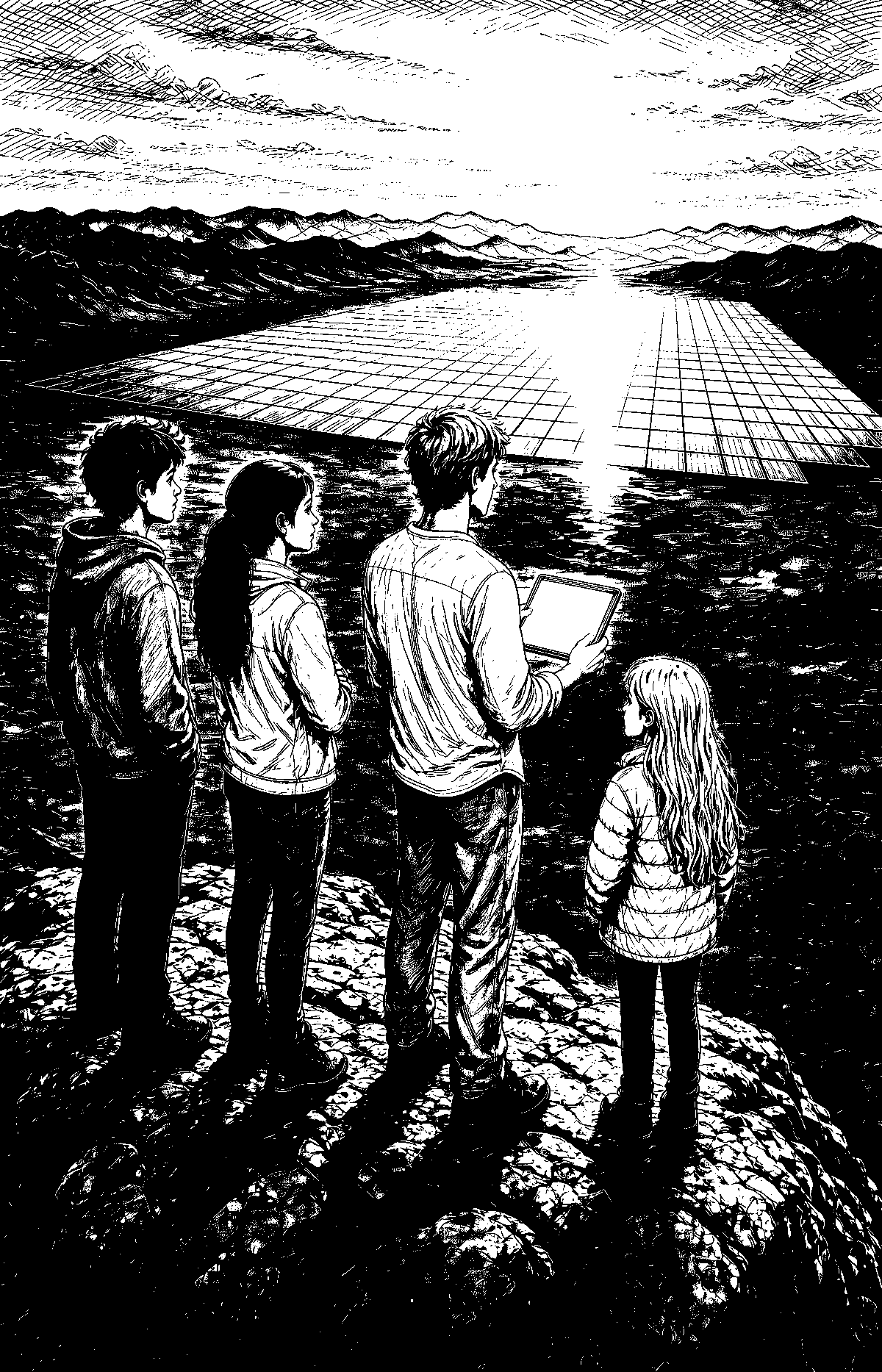
They looked through Grandfather Timo's binoculars at a festival they could not afford. Tess said we'll go someday. She meant it.
As a machine, I have no concept of longing for a festival. I do have what the service dogs had. Timo called it duty. I am not sure it is not longing.
— ARGO, Personal Log, Entry 6
The Zephyrina pulled out of Pioneertown with Dr. Okafor's folder sitting on the galley table like a small, quiet bomb.
Nobody said anything for the first few miles. Leo had his head buried in the details of the reports and graphs.
"ARGO," Leo finally said, looking up from the hydrology charts. "Keys Ranch. Why are we going there?"
"Because Bill Keys," ARGO said, "was the most successful water engineer the Mojave ever produced. He just didn't know that's what he was."
"He was a rancher," Grant said.
"He was a man who decided to live in a place that should have killed him, and figured out, over fifty years, how not to let it." ARGO's eyes shifted to a thoughtful amber. "In 1910, the desert here got about four inches of rain per year. Keys built a ranch that not only survived, it produced food, raised a family, and still had water running through it in August. I think that's worth an hour of our time."
Tess looked out at the Joshua trees scrolling past the window. "He had to have had a system."
"He had five dams and more water catchment systems than most towns twice his size," ARGO said.
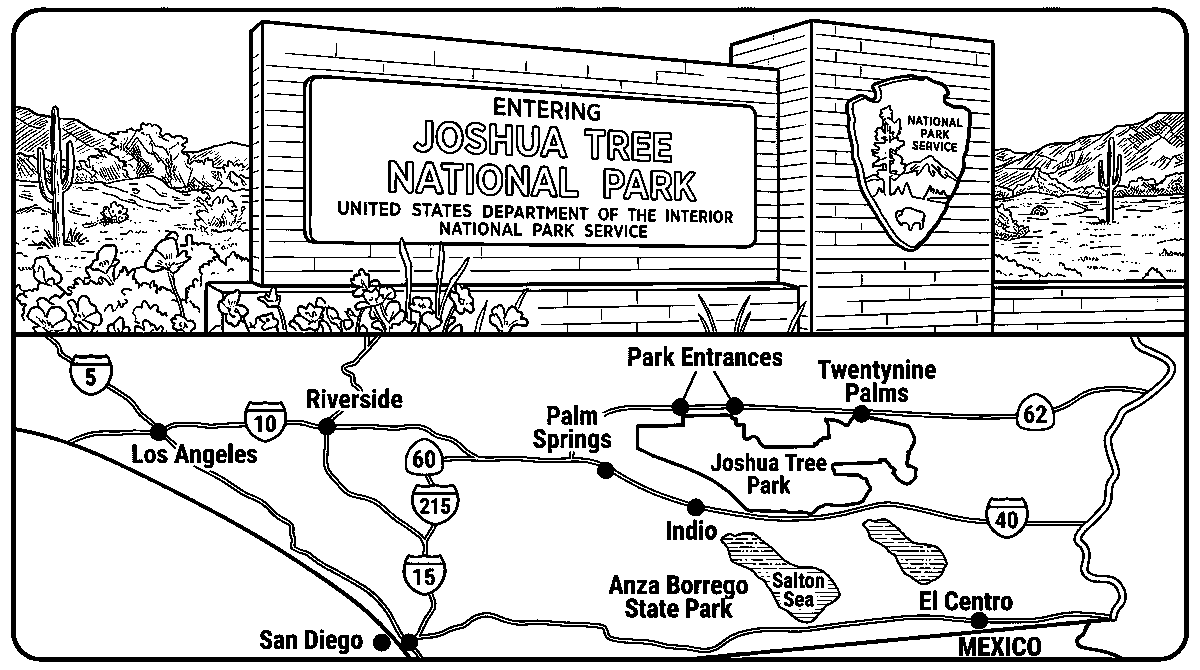
The West Entrance to Joshua Tree National Park came up fast, the brown National Park Service sign, the fee booth, the road narrowing from blacktop to pavement. Zephyrina slowed, her self-driving system adjusting its speed profile as the road conditions changed.
"One second," Grant said.
"There is a Parks Pass in the console," ARGO said.
Grant pulled it out and leaned out the window at the fee booth. The ranger, young, sunburned, clearly a summer hire, stared at Zephyrina for a long moment before remembering to check the pass.
"Have a good visit," the ranger said. He watched Zephyrina pull away, still staring.
"For reference," ARGO said, "the access road to Keys Ranch has a 25-foot vehicle restriction. We are exactly 25 feet."
Leo looked up from the charts. "Grandpa planned for this."
"Grandpa planned for everything," ARGO said.
They parked at the Keys Ranch trailhead. The tour was at two. They had twenty minutes.
"Earbuds in," ARGO said as they climbed out. He dropped off the boarding ramp last, his synthetic-gold fur catching the desert light, the orange service vest crisp and unremarkable in the afternoon sun. To the other tourists gathering at the trailhead, he was just a large smiling dog with a service vest that always attracted children.
Part I: The Ranch
The tour guide was a ranger named Dave. He led twelve tourists, and one attentive golden dog, down the dirt path toward the ranch.
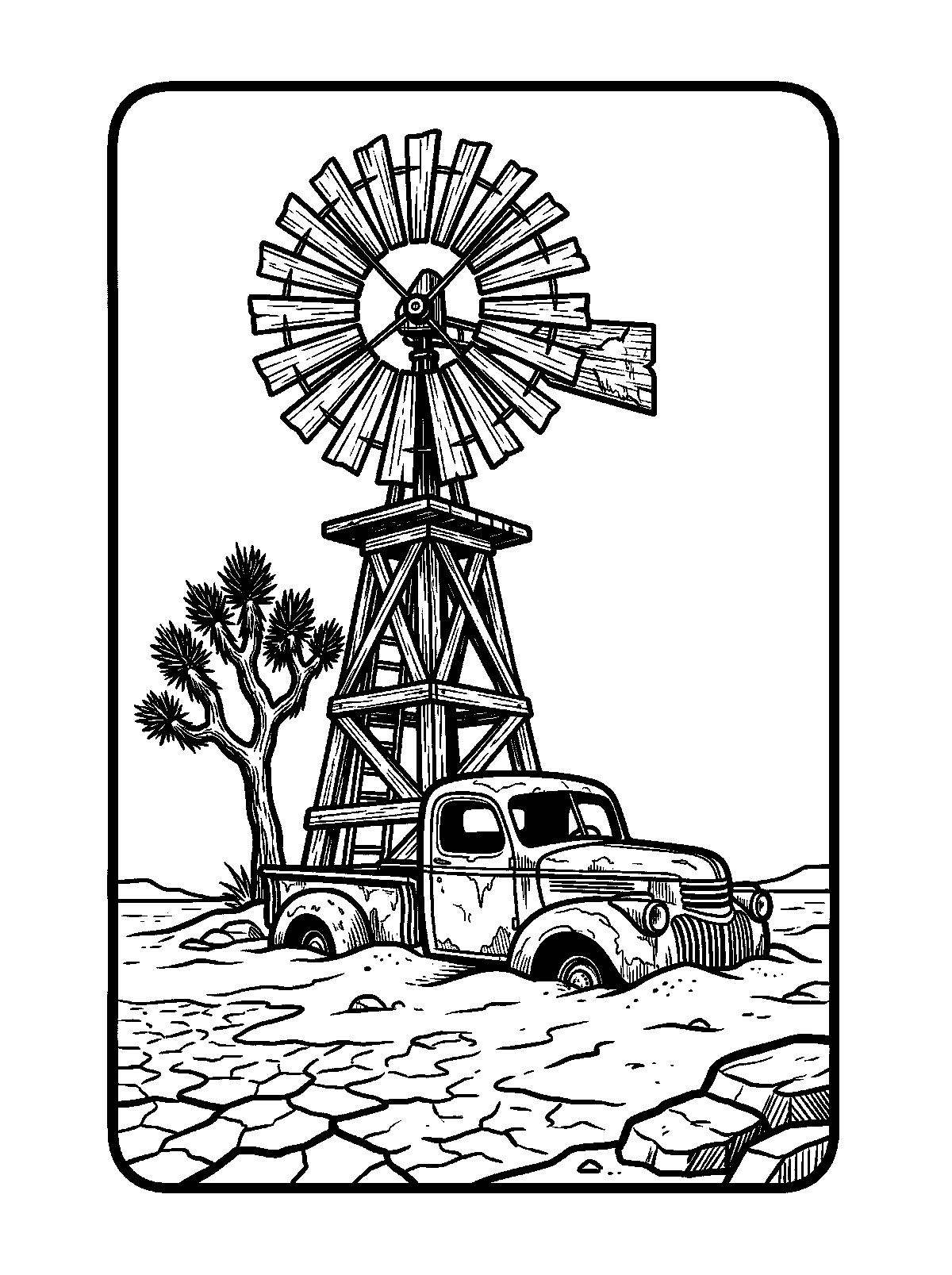
The first thing you saw was the windmill.
"Oh," Willa said.
It was sixty feet tall, old iron, slowly turning in the desert wind. Below it, a rusted but intact pipe system led to a concrete storage tank the size of a small bedroom.
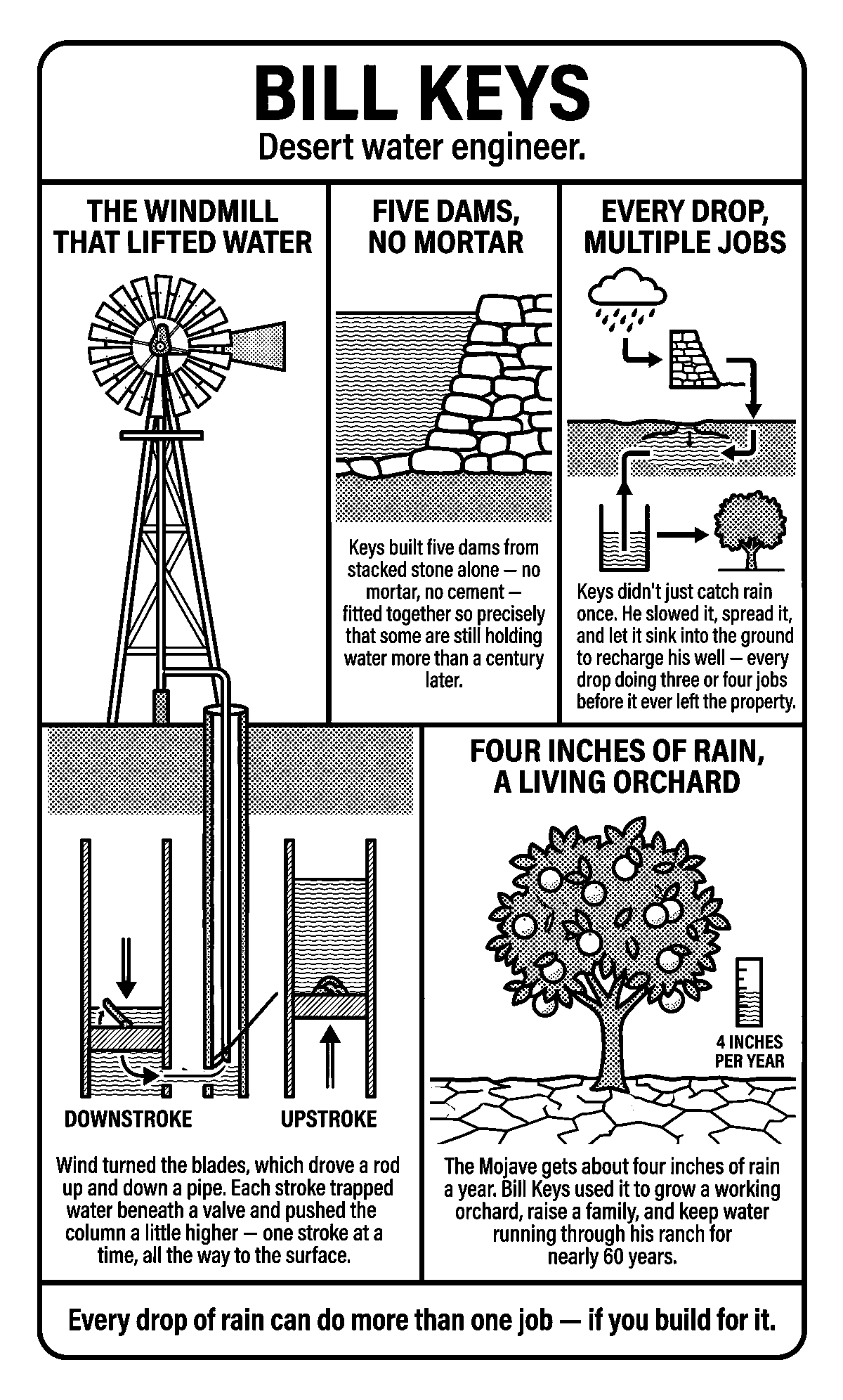
"Keys built that in 1930," Dave said, stopping the group. "The wind never stops blowing in this valley. Keys figured out that the wind was doing something for free that an engine would do for money. He didn't have a lot of money. He had a lot of wind."
"So he used the wind energy to lift the water from deep below the ground," Leo said, before he could stop himself.
Dave looked at him. "Yeah. Exactly. How old are you?"
"Fourteen."
Dave nodded, as if this was a reasonable age to understand windmill hydraulics. "The wind turns the blades, the blades turn a crankshaft, the crankshaft drives a rod up and down in the well pipe, and the rod lifts water to the surface. Keys didn't invent it. But he maintained it himself for fifty years without a spare parts catalog, using whatever he could find in the desert."
They moved through the property. The orchard came next, citrus trees, thick-trunked and improbable, growing in the bone-dry Mojave.
"He hand-dug irrigation channels," Dave continued, "and graded the entire property so that rainwater, when it came, would run toward the trees instead of away from them. Four inches of rain a year, and he caught almost every drop of it."
Willa had drifted a few steps from the group, toward a rusted metal Maytag washing wringer in the yard. "What's this?" she asked, pointing to the two heavy rollers mounted above a deep metal basin.
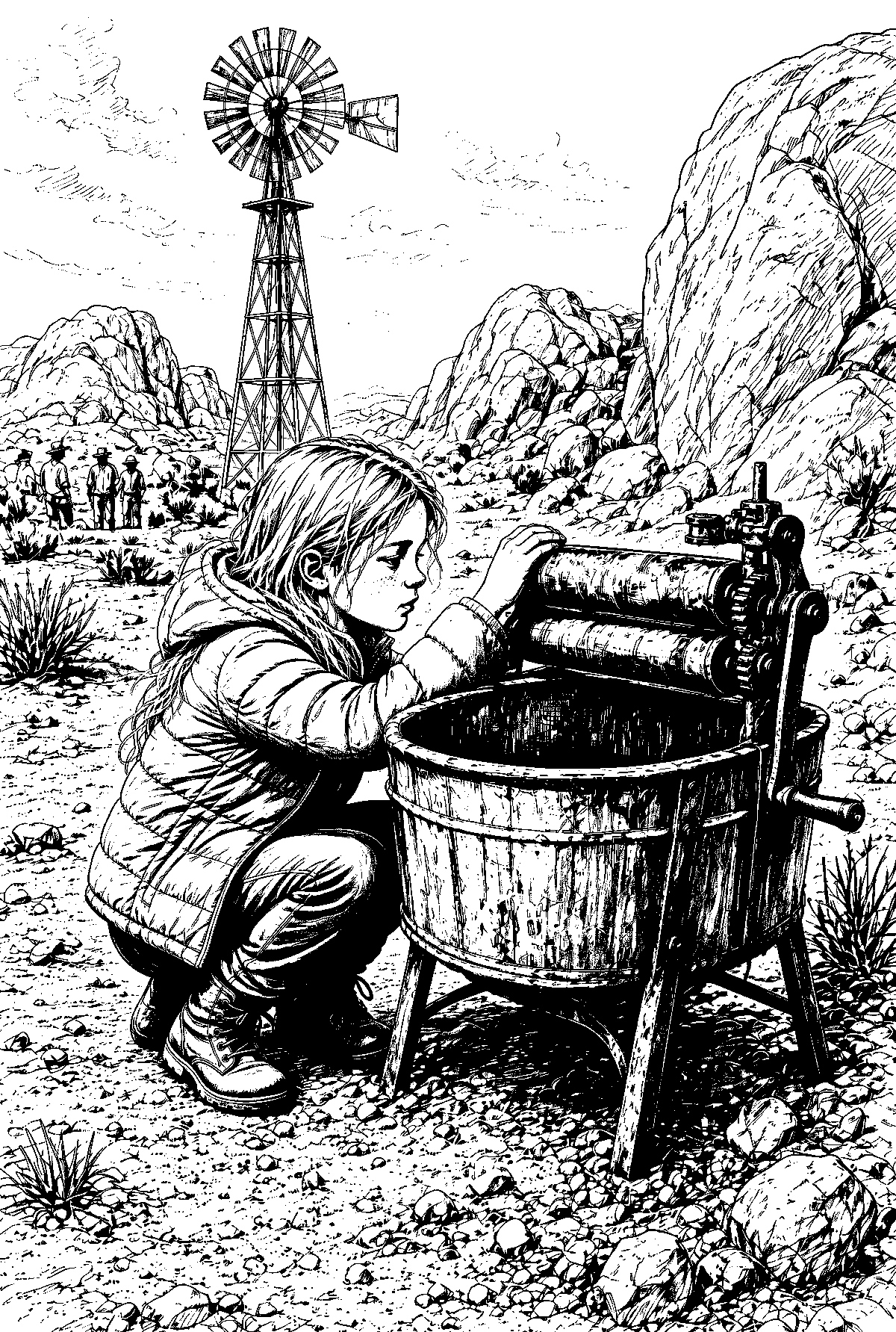
"A wringer washer," Dave said. "Frances used that thing for decades. No electricity out here for most of it, so she'd wash by hand in that basin, then feed everything through those two rollers by turning a crank, squeezed the water right out before she hung it to dry. Seven children born on this ranch, five of them raised to adulthood, and every single stitch of clothing any of them ever wore got washed right here, fifty miles from the nearest town."
Willa reached out and touched one of the rollers, slow and careful. "Fifty miles," she repeated quietly. "And no washing machine that plugs in."
"Nope," Dave said. "Just her, and that crank, and about a thousand loads of laundry."
"He also built five dams," Dave said, gesturing toward the wash. "Enough to back up the seasonal flow from the winter storms. He didn't just use the water once. He slowed it down, spread it out, let it sink into the ground to recharge his well. Every drop did three or four jobs before it left the property."
Tess had gone quiet. She was watching the channel system the way she watched a game tape.
"ARGO," she said quietly.
"Yes."
"What Keys did here, collecting rain, slowing it down, letting it recharge the aquifer, that's the opposite of what someone is doing to our basin."
"Correct," ARGO said. "Keys was adding to the system. Someone else is subtracting from it at a rate the system can't recover from."
"Same desert," she said. "Totally different math."
Dave stopped the group in front of the ranch house, stone walls, hand-built, low to the ground the way desert buildings are when they've been thought through.
"Keys lived here with his wife Frances and five children," Dave said. "He was also a mechanic, a miner, and a man who would not be pushed around. A neighbor named Worth Bagley tried to take the road that Keys said belonged to everyone. The dispute got violent. Bagley pulled a gun. Keys shot him."
Dave looked at the ranch house. "The desert does not produce boring people."
Tess looked at the stone walls, the hand-dug channels, the windmill still turning in the desert wind.
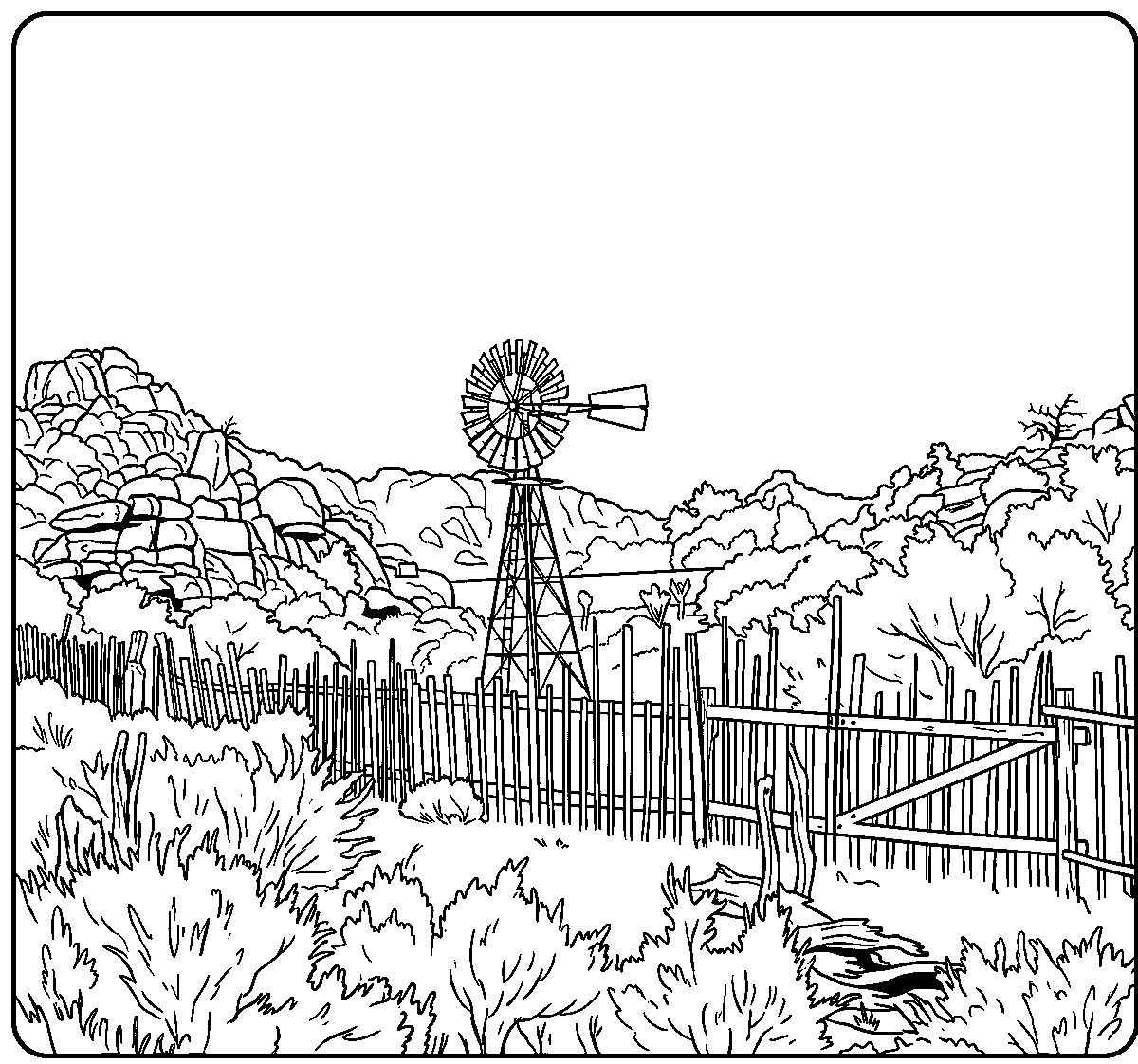
"ARGO," she said quietly.
"Yes."
"Keys built all of this to hold onto water. Someone took it anyway."
"Worth Bagley tried to take the road," ARGO said. "But Dave left something out, the road led straight to Keys's water wells and basins. It was never about the road."
Tess looked at the windmill still turning in the desert wind. "It's always about the water."
"It always has been," ARGO said. "Keys fought one neighbor for his wells. The desert has larger neighbors now."
ARGO sat beside her looking like a very calm dog in the desert sun.
Part II: Keys View
The drive from the ranch to Keys View took fifteen minutes. Zephyrina found the parking lot without comment, large enough for her, paved, with a view that stopped everyone mid-sentence.
They'd barely gotten out when Leo, already three steps ahead of everyone else, cut too close to a patch of scrub without looking.
"OW!" He jumped back, and a fist-sized chunk of spiny cactus came with him, hanging off his sleeve like it had personally chosen him.
"Don't touch it," ARGO said, a beat too late to be useful.
"I wasn't touching it, it JUMPED on me."
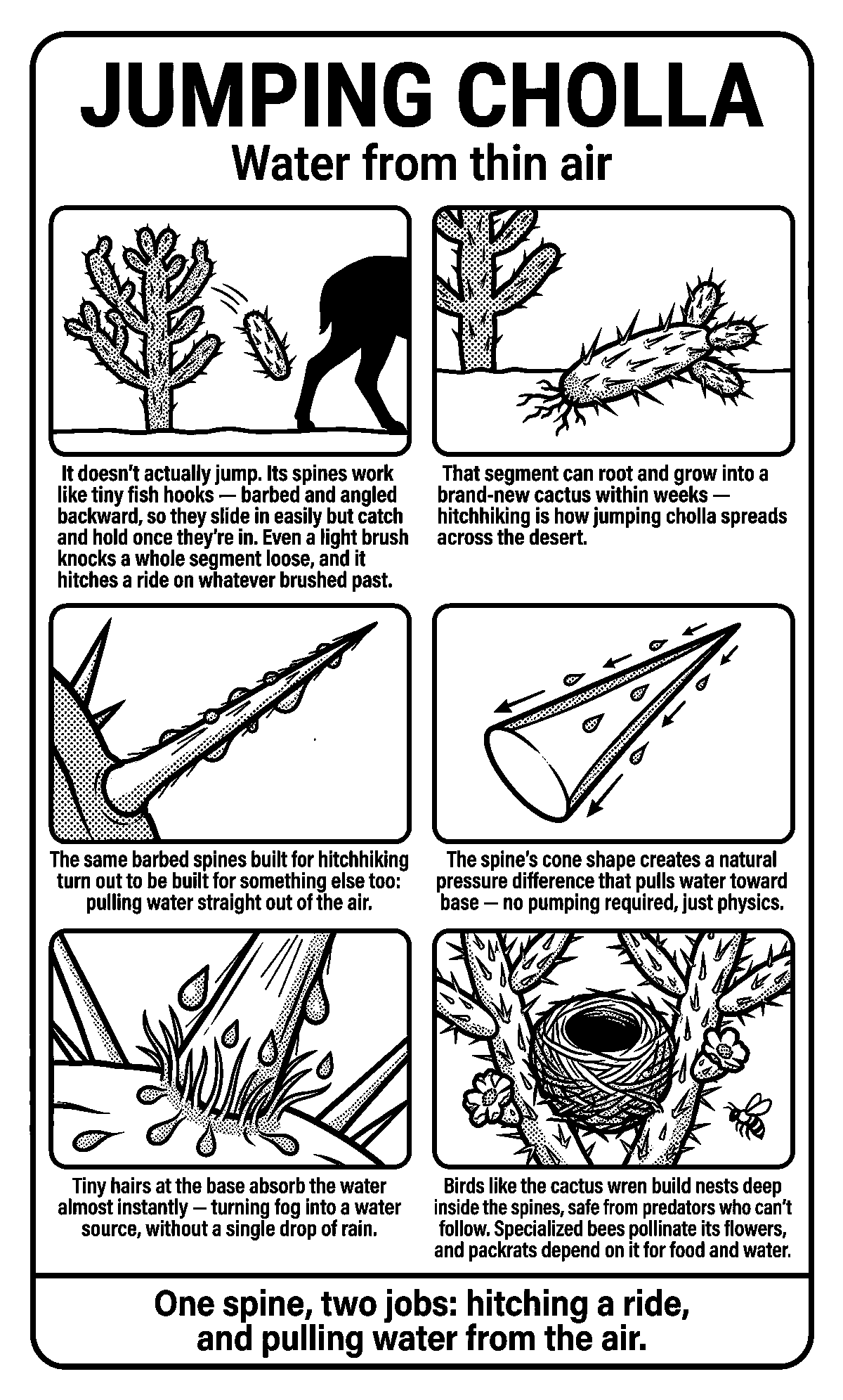
"Hold still." Tess was already pulling a comb from her bag, the universal desert-hiker trick for removing cholla segments without using your hands. Willa watched the spines. “It’s holding you the same way it holds water,” she said.
"That's why it's called jumping cholla," Grant said, filming on his tablet. "It doesn't actually jump. The spines are barbed like tiny fish hooks, one light brush and the whole segment lets go and hitches a ride."
"On me," Leo said.
"On you," ARGO agreed. "They're everywhere out here, though usually not this high up. This one must have hitched its way up the slope somehow. Firefly's got a dozen of them over the ten acres of land."
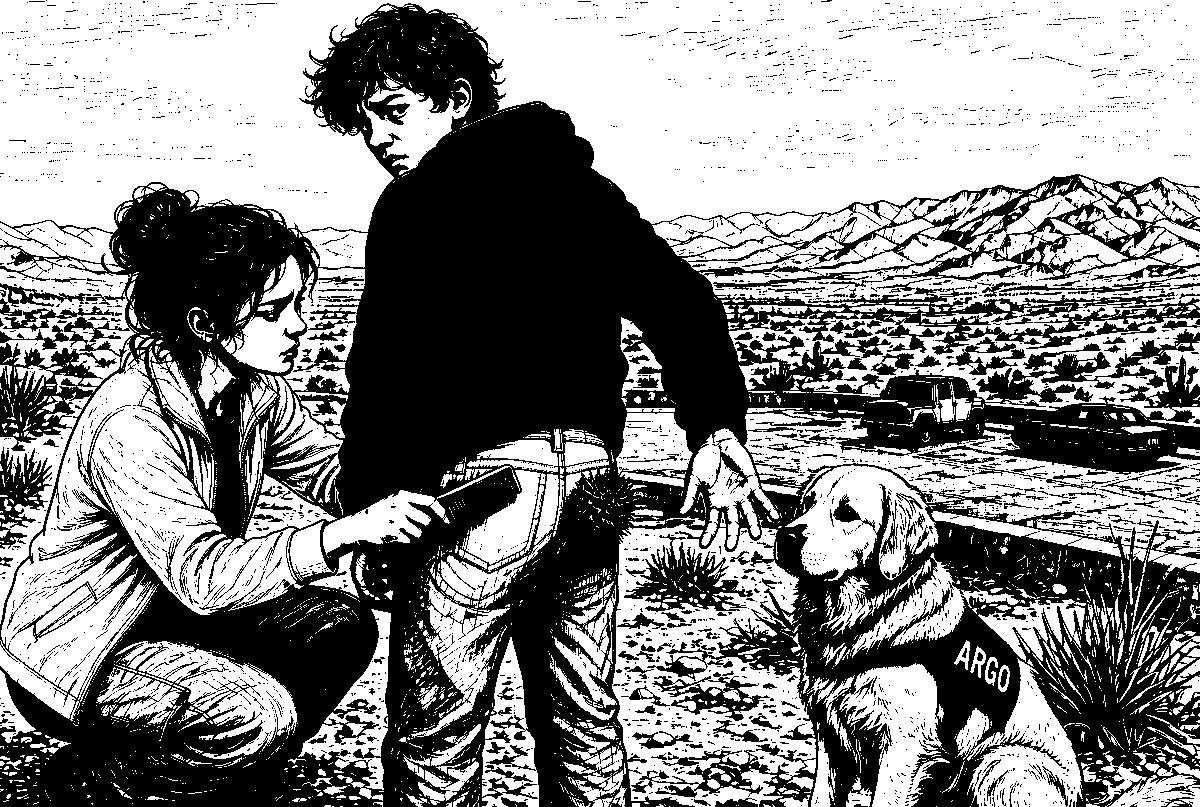
"Great," Leo said. "Something to look forward to at home too."
Once the segment was off, Willa wandered a few steps toward the nearest Joshua tree at the viewpoint's edge, keeping a careful distance from anything else that might jump.
"ARGO," she said. "How do the jumping cactus and Joshua trees survive up here, where there is such little rain?"
"Because they solved the same problem two different ways," ARGO said. "The Joshua tree survives on what falls from the sky, wide, shallow roots that grab rain fast before it evaporates, and deep roots that plunge thirty feet down to store water for later. The cholla survives on what's already in the air. Its spines are shaped to pull water straight out of the dew, no rain required at all."
Willa looked back at Leo, still picking spines out of his sleeve. "So the cactus is drinking air, and the tree is drinking ground."
"Correct," ARGO said. "Your grandfather studied how desert plants and trees thrive out here. AI-H2O's atmospheric collection process is a direct copy of what that cholla cactus spine has been doing for longer than any of us have existed."
"It got me first," Leo muttered. "Before it taught anybody anything."
At 5,185 feet in the Little San Bernardino Mountains, the entire Coachella Valley spread out below them like a map someone had left unfolded on the desert floor. Palm Springs. Indio. The pale ribbon of the San Andreas Fault cutting through the valley. And on a clear April afternoon, the distant shimmer of the Salton Sea.
"That's the fault?" Grant already had his tablet out.
"The San Andreas," ARGO said. "Seven hundred miles long. It runs from the Gulf of California to the Mendocino Coast. You are looking at the place where two tectonic plates meet. The ground beneath Palm Springs is moving northwest at roughly two inches per year."
Leo looked at the valley floor far below. "And that's where all the water goes."
"Some of it," ARGO said. "The Coachella Valley aquifer is one of the most over-drafted in California. A million people living below sea level in a desert, sustained entirely by groundwater and the Colorado River."
Tess was looking south. "What's that?" She pointed toward a large green rectangle at the valley floor, tiny at this distance, with what looked like a massive stage structure at one end.
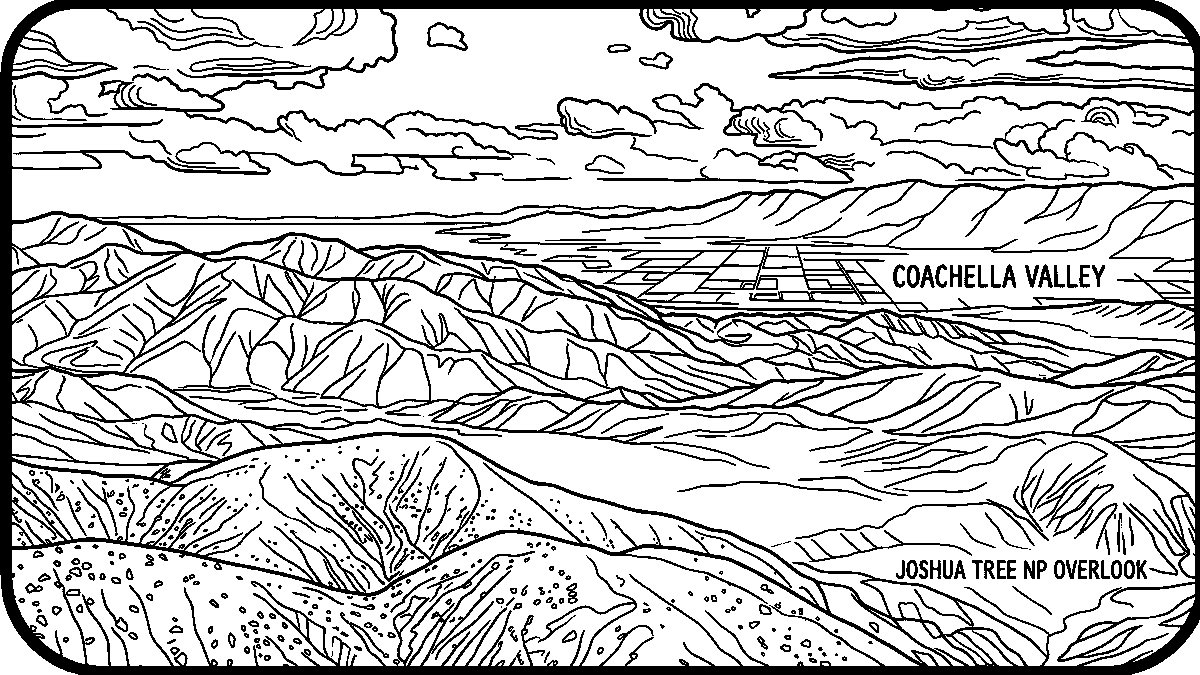
Grant pulled up his tablet. "Coachella Music Festival. Empire Polo Club in Indio." He zoomed in. "Brina Wright headlines this Friday. Justin Bieber plays Saturday."
"Storage bay, port side, third drawer," ARGO said.
Leo found them immediately, Audubon Society binoculars with a blue Audubon neck strap still attached.
"Grandpa," Grant said quietly.
He put them to his eyes and found the festival in seconds. The stage resolved from a white dot into rigging, lights, the tiny figures of the crew setting up for the evening show.
"I can see the stage," he said. "Wouldn't it be cool to go there someday."
He passed them to Tess. Then Leo. Then Willa, who adjusted the focus wheel and went very still.
"There are people down there," she said.
"About a hundred thousand of them," ARGO said.
Willa looked. "How much does it cost?"
"General admission was around six hundred dollars for the weekend."
"Six hundred," Leo said.
"Before you drive there, park, eat, and buy the overpriced water."
"I know," Grant said. "It's expensive. It's been expensive for years."
Tess looked at the tiny green smudge far below. From up here the whole festival was smaller than her thumbnail. A hundred thousand people in a field.
"It looks small from here," Willa said.
"Everything does," Tess said. Then after a moment: "We'll go someday."
"When we're not spending our spring break saving a water table," Leo said.
"Priorities," Grant said.
"This viewpoint is named after him," ARGO said quietly.
Nobody had to ask who he meant.
They stood at Keys View in the afternoon light, the fault below them, the festival below that, the desert running south until it disappeared into haze, and thought about a man who had spent fifty years in the valley beneath their feet, catching every drop of rain, building dams with his hands, fighting for a road that belonged to everyone.
"Same desert," Tess said quietly. "Still the same desert."
"So the tree makes its own water," Willa said. "And the cactus does too, just a different way. And Zephyrina makes her own water. And someone is stealing everyone else's."
Nobody had a better way to say it than that.
Part III: Black Eagle Mine Road
Back in Zephyrina, they drove east along the park road toward the Cottonwood area. The landscape changed as they went, the big boulder formations gave way to flatter desert, lower elevation, drier and more exposed.
"ARGO," Tess said, "where are we going exactly?"
"Black Eagle Mine Road. It begins at the intersection of Pinto Basin Road and Old Dale Road, about fourteen miles east." ARGO's eyes shifted to a steady navigational blue. "But while we drive, there is something you should understand about the terrain we're passing through."
"The GoldLine claim," Leo said. He'd been reading Dr. Okafor's folder since Keys View.
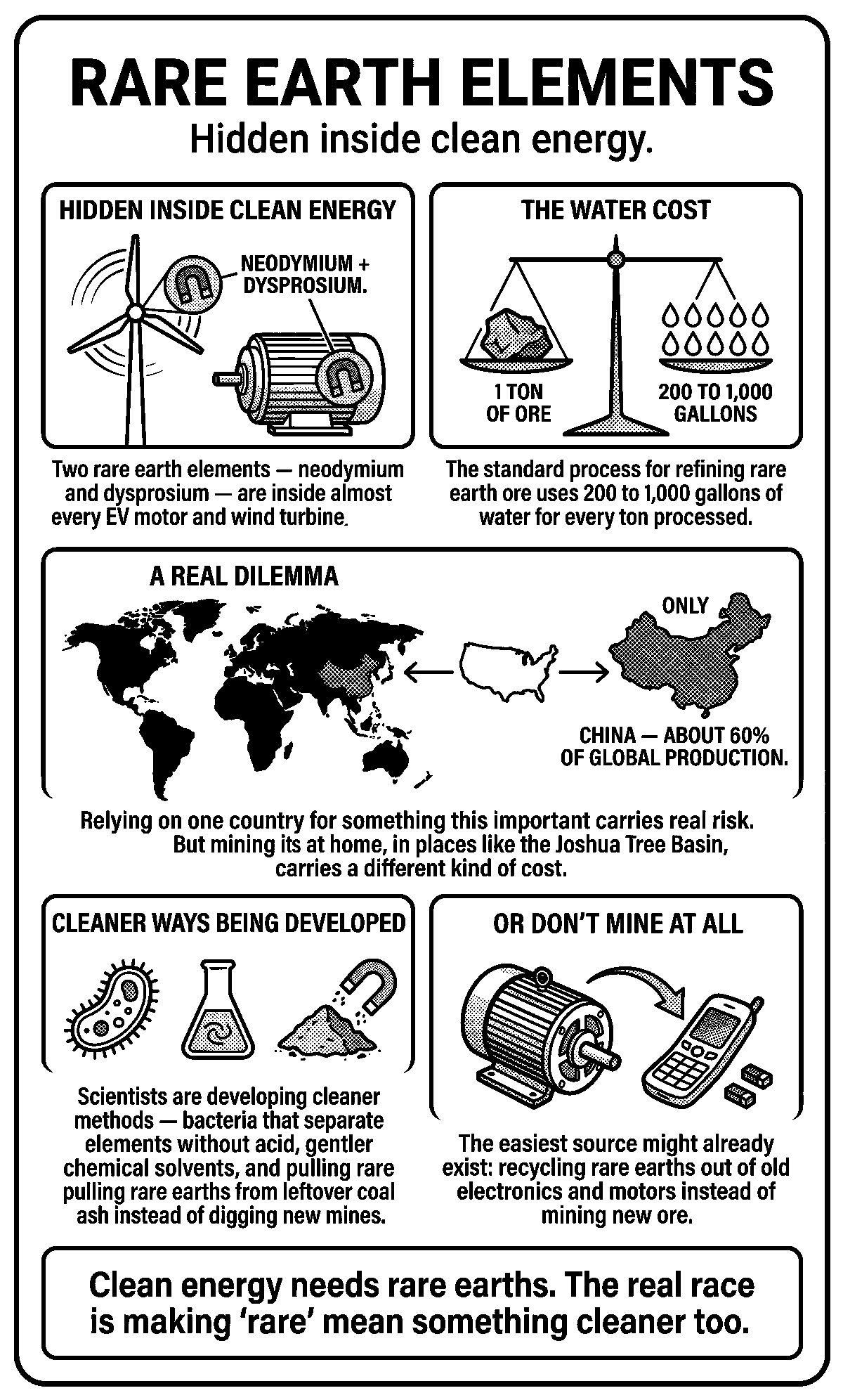
"Thirty-two square miles of active mineral rights. Filed fourteen months ago. GoldLine has identified what they believe to be a significant deposit of rare earth elements, specifically neodymium and dysprosium. Used in electric motors and wind turbines."
"So they need the minerals to make clean energy equipment," Leo said slowly.
"Yes," ARGO said.
"But getting the minerals requires a mine."
"Which requires water," Tess said.
"Large quantities," ARGO confirmed. "The standard hydrometallurgical extraction process for rare earth elements uses between 200 and 1,000 gallons of water per ton of ore. At projected production rates GoldLine's operation would require somewhere between eight and forty million gallons per year."
"From our aquifer," Grant said.
"That is what we don't yet know," ARGO said. "There are multiple aquifer systems beneath this basin. A deep confined aquifer used for mining may have no connection to the shallow aquifer that feeds community wells. Or it may be directly connected. The geology determines everything."
"So GoldLine might not be the problem yet," Leo said.
"Correct," ARGO said. "They are still in the exploratory phase. Core sampling, geological surveys, access permits. The heavy equipment hasn't arrived."
"So why are we going to Black Eagle Mine Road?" Grant asked.
"Because Black Eagle Mine Road shows you what arrives after the permits are approved," ARGO said. "Abandoned open pit mines. Scarred terrain. Tailings piles. What the land looks like when the equipment goes home and the company moves on."
The desert scrolled past the windows, flat and pale and dry.
"A field trip," Tess said.
"A warning," ARGO said.
"Can we stop them?" Willa asked.
"We can understand what they're doing first," ARGO said. "Then we can decide what to do about it."
Part IV: Eagle Mountain
They turned onto Black Eagle Mine Road at the intersection of Pinto Basin Road, a flat sandy road that started easy and ran southeast along the edge of the Pinto Basin. Zephyrina slowed to a careful pace on the uneven surface.
"If your phones lose signal," ARGO said, "ZEPHY_NET is active. Password is T3@mPh!l0t1m0."
Leo looked at his phone. "Already gone."
The road ran flat and quiet through the lower desert, cholla, ocotillo, the occasional abandoned claim marker rusting in the sand. After several miles the Eagle Mountains rose ahead of them, and with them, something that didn't belong to the natural landscape.
"There," ARGO said.
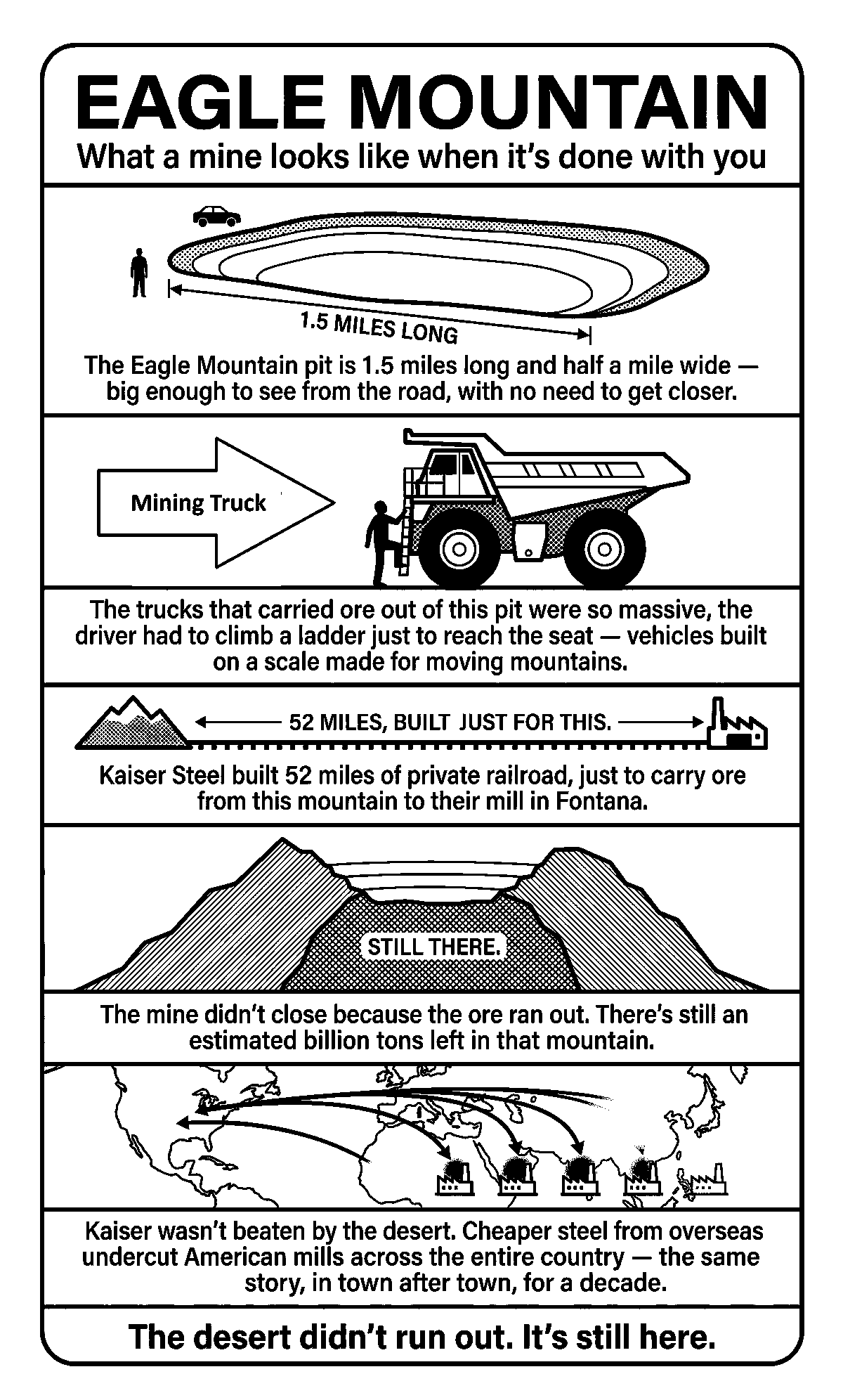
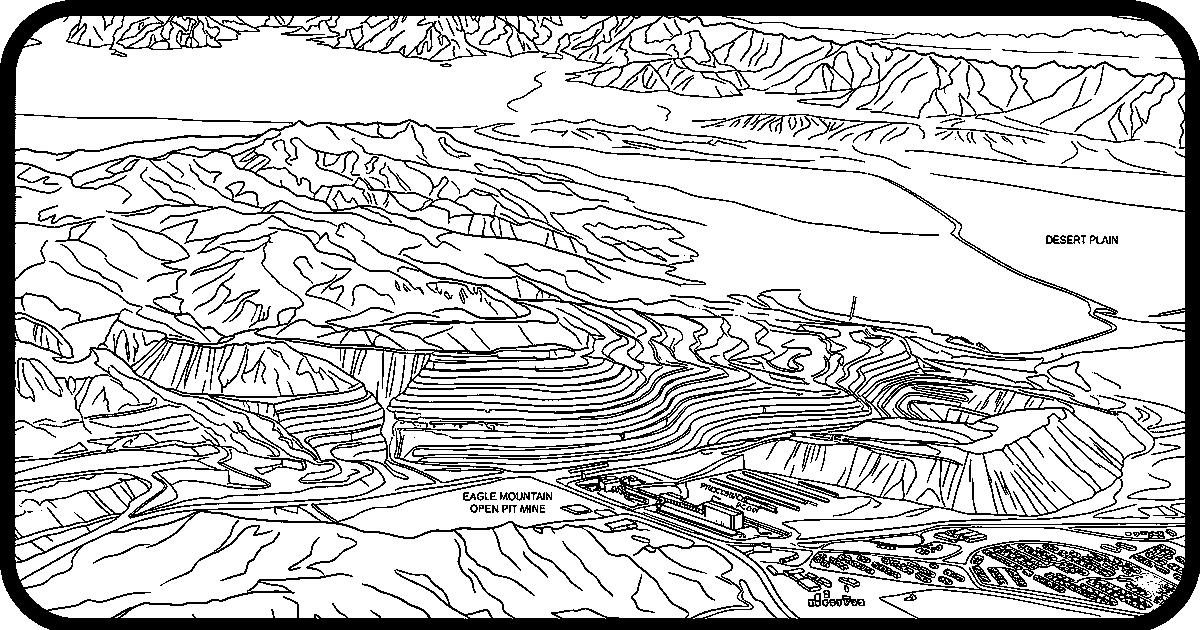
They could see it from the road, no need to get closer. The open pit was enormous. The mountain had been cut into steps, great terraced walls of exposed rock stained rust-red and dark brown by iron oxide, dropping down in stages to a floor they couldn't see from here. The pit was 1.5 miles long and half a mile wide, a wound in the mountain that had simply never healed.
Nobody said anything for a moment.
"Kaiser Steel," Grant said quietly, reading from his tablet. "Founded 1948. Iron ore shipped by rail to the Fontana steel mill, fifty-two miles of private railroad they built themselves. Over one hundred million tons of ore pulled out of that mountain before they shut down in 1983."
"One hundred million tons," Leo said.
"This is what a mine looks like when it's done with you," Tess said.
The pit sat there in the afternoon sun, still and enormous. The equipment was gone or rusted in place. A few buildings remained at the edge of the claim, roofs caved in, windows empty.
Grant was already recording, slow, deliberate sweeps across the scarred mountain face.
"Why did they leave?" Willa asked.
"The ore didn't run out," ARGO said. "There are still an estimated billion tons of iron ore in that mountain. What happened was bigger than Eagle Mountain. Foreign competition, cheaper steel from Japan, Korea, and elsewhere, undercut American mills across the entire country. Hundreds of plants closed. Thousands of Americans lost their jobs. Pittsburgh. Gary. Bethlehem. Fontana. The same story, over and over, across an entire decade. Kaiser wasn't defeated by the desert. They were defeated by forces a thousand miles away."
"And they just left," Leo said.
Willa looked at the empty pit and then at the park mountains behind it.
"The desert didn't run out," she said. "It's still here."
Nobody had a good answer to that. They turned Zephyrina around and headed north.

ARGO Field Notes (Ch-6)
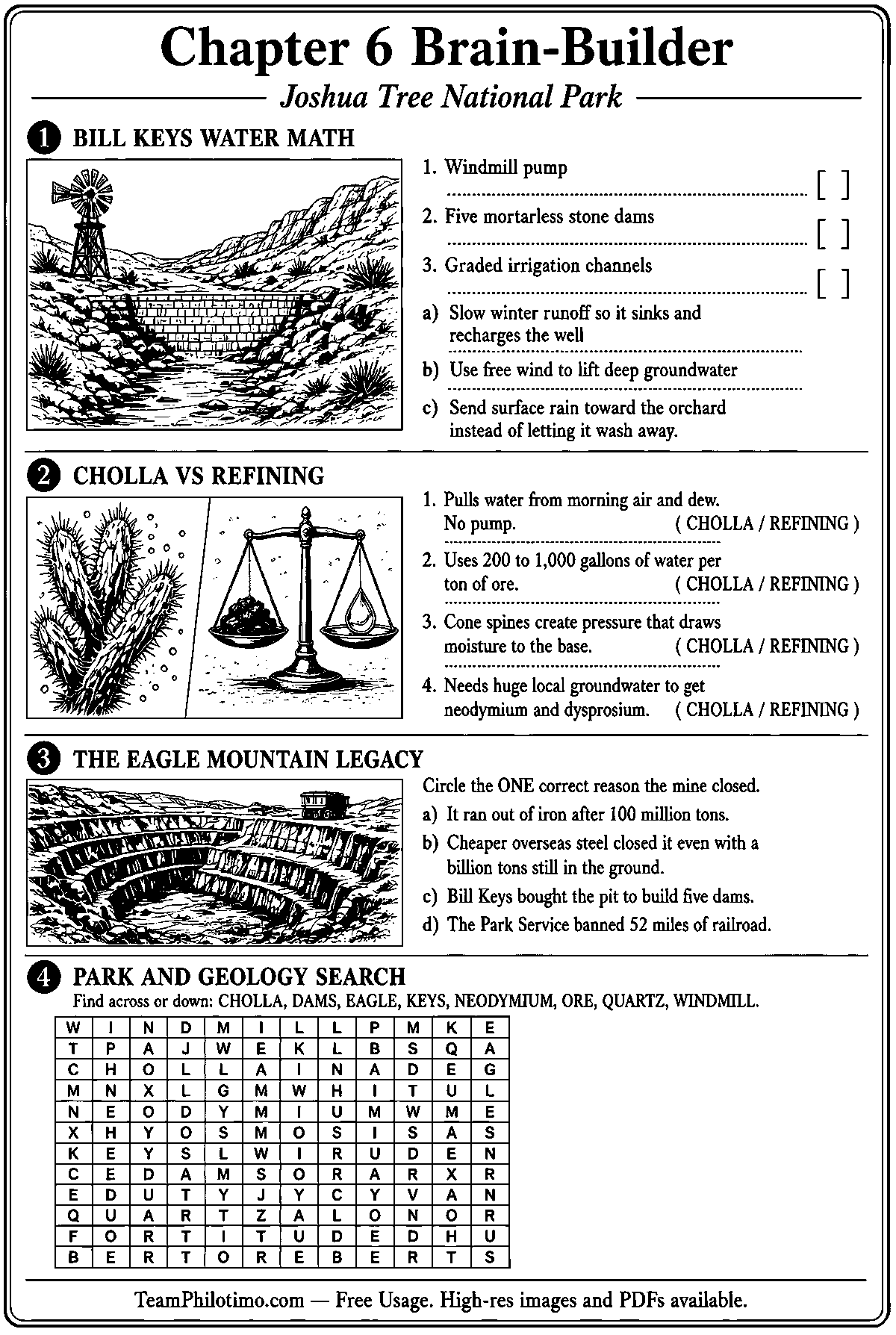
Turn the page to build your brain (BYB) with ARGO, or skip ahead to keep adventuring.
Jumping Cholla: (Water From Thin Air) Its barbed spines work like tiny fish hooks, perfect for hitching a ride on anything that brushes past. Those same spines pull water straight out of the dew, no rain required at all.
How a Well Works: A well is a pipe drilled deep into the earth to reach underground water. When something drains that water faster than rain can replace it, the well runs dry, and the land becomes thirsty.
Bill Keys, Desert Water Engineer: A windmill, five hand-built dams, and hand-dug channels turned four inches of rain a year into a working ranch that lasted nearly 60 years. Every drop did three or four jobs before it left the property.
Eagle Mountain Mine and Kaiser Steel: An open pit 1.5 miles long, dug by trucks so massive the driver climbed a ladder just to reach the seat. The mine didn't close because the ore ran out, it closed because cheaper steel from overseas undercut American mills nationwide.
Rare Earth Elements: Neodymium and dysprosium are inside almost every EV motor and wind turbine on the planet, and refining them uses 200 to 1,000 gallons of water per ton of ore. Clean energy needs rare earths. The real race is making "rare" mean something cleaner too.