
About the author
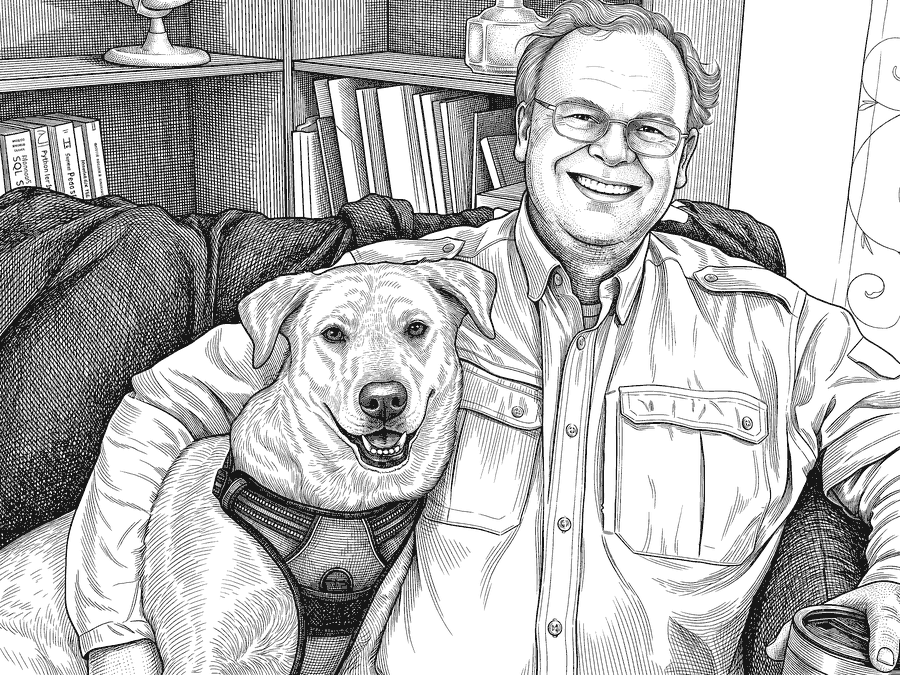
JP Fremon
My grown daughter asked me what I planned to write a book about. I paused for a moment and then said, “Remember about 40+ years ago, when I would tell you bedtime stories of the little girl with the magical Barbie doll that could walk and talk and helped the little girl through all sorts of adventures, but no one else knew that Barbie was able to walk and talk?”
I am JP Fremon, a retired 75-year-old software engineer who loves science, technology, AI, and storytelling, who apparently had been carrying that story around for 40+ years, which came together featuring ARGO the robot dog who looks like a normal dog.
ARGO is modeled on Boone, a Labrador mix my wife LL and I found as a puppy in a Walmart parking lot near Glacier Park, Montana, about ten years ago. He’s a registered U.S. service dog who loves all children, has gone to nursing homes and hospitals, and even goes trick-or-treating with grandkids on Halloween.
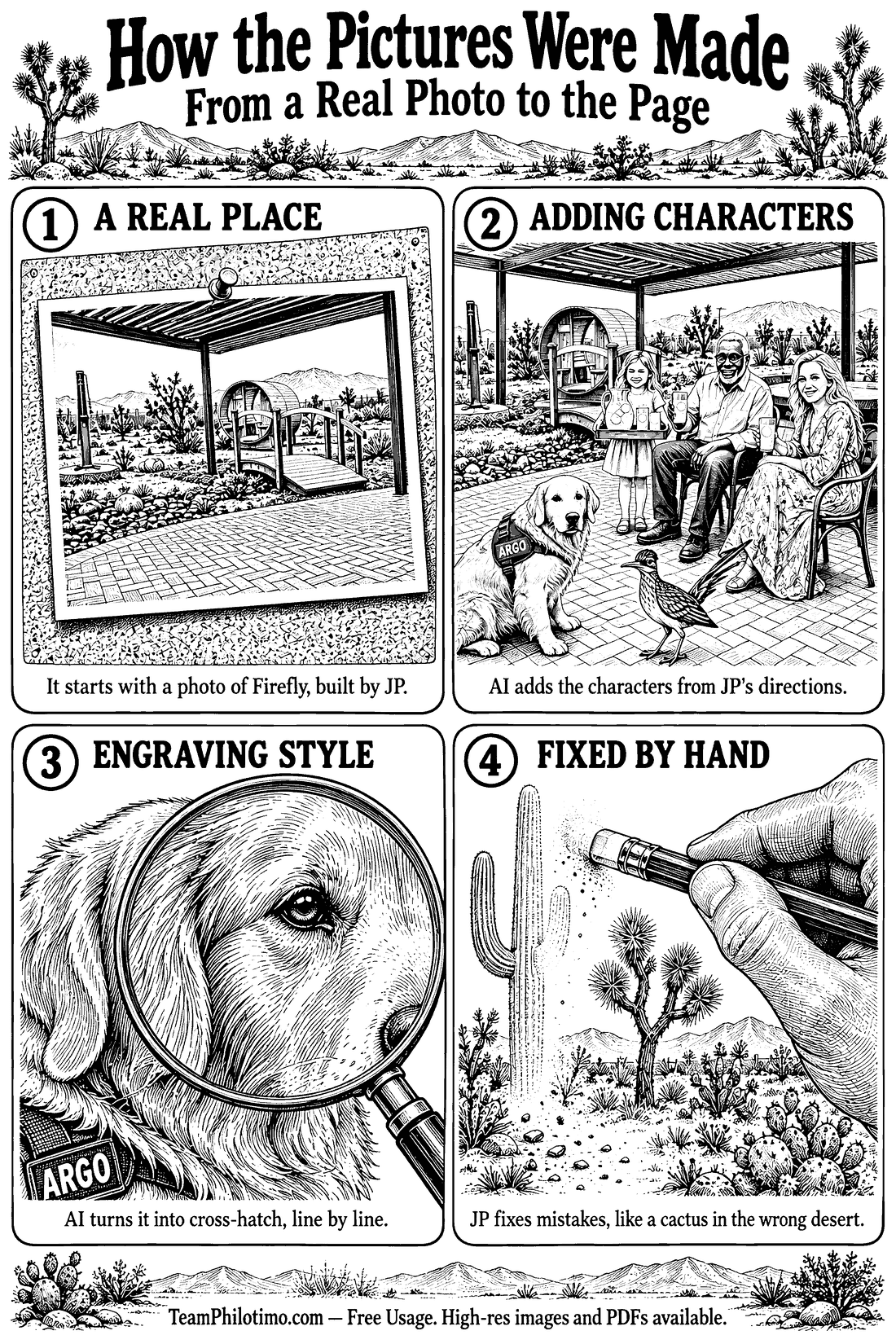
Zephyrina is our real solar-and-diesel-powered 1998 motorhome, which I hope to add solar wings to someday. We built Firefly ourselves, on ten acres near Joshua Tree, and recently added the curved bridge, fountains, sauna, outdoor kitchen, and our Mallotimo Seven course. Additionally, I have a self-driving Tesla that I am comfortable in while it drives me around town, but sometimes likes to park in my neighbor’s driveway.
How this book was made
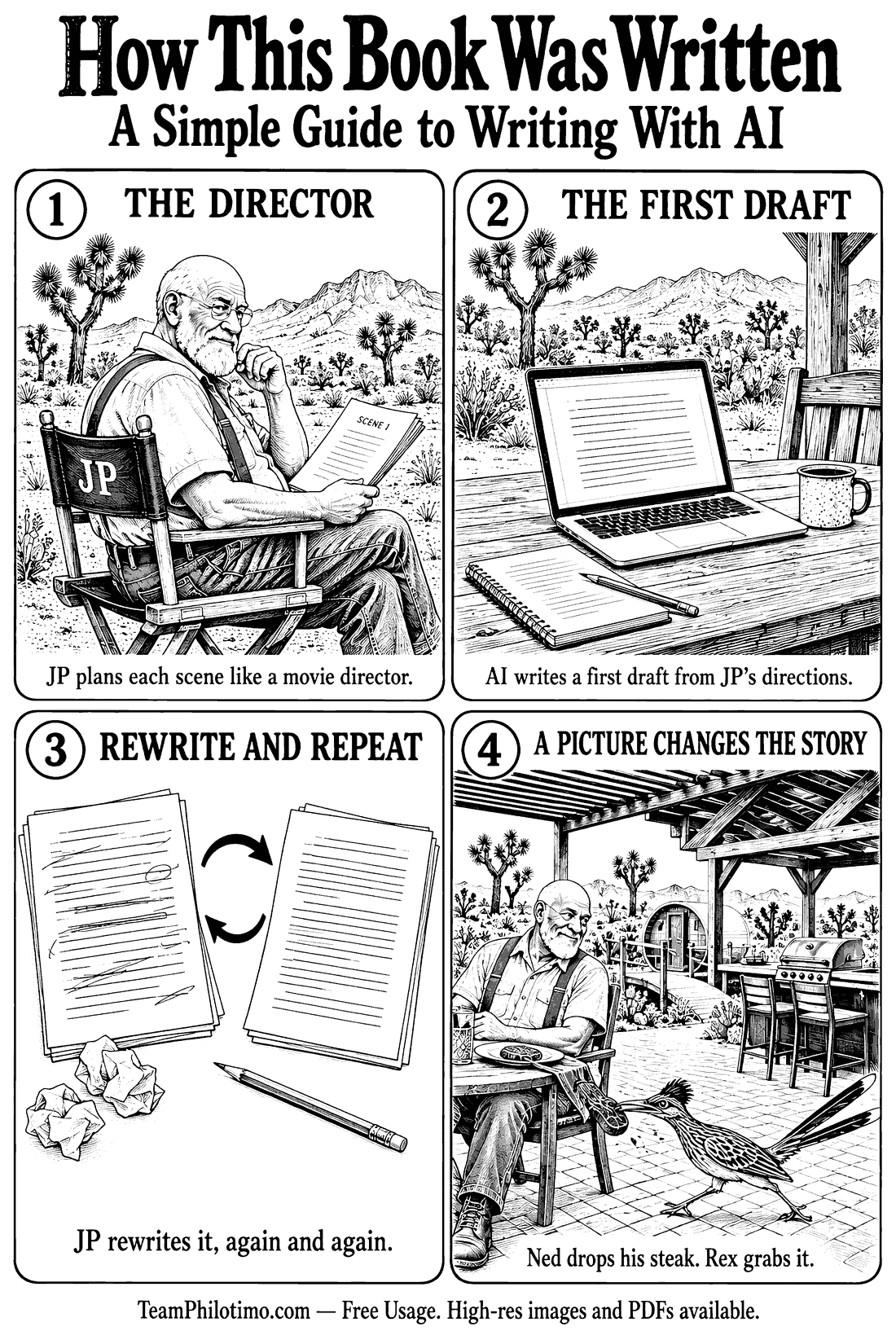
How AI was used to create this book
For more than fifty years I have utilized software tools to leverage my time and increase my capabilities in software development and mechanical tools to do the same in home building. For me AI is just another tool, to leverage my capabilities and do things I may not be talented enough to do, such as drawing images.
The following pages attempt to explain the process that I utilized to create this book, but are likely unique to me because all the places that ARGO and the kids go is someplace I have been to, while the AIs never have.
Warning — AIs get things wrong
At first AIs seem very smart, but after working with Claude, Gemini, and Grok for six months, I have learned their limitations and they are many. They do not have a sense of time or the order of things that happened. Example – they wanted ARGO to limp in Chapter 7, when ARGO did not get hurt until Chapter 10. They are often wrong about technology, if it is new or changing (AI-H2O, Flying Zephyrina, Electrofluidic Muscles). They had great trouble understanding why I would give the book away to anyone on my website, without email, password or any friction.

Crafted by human and AI
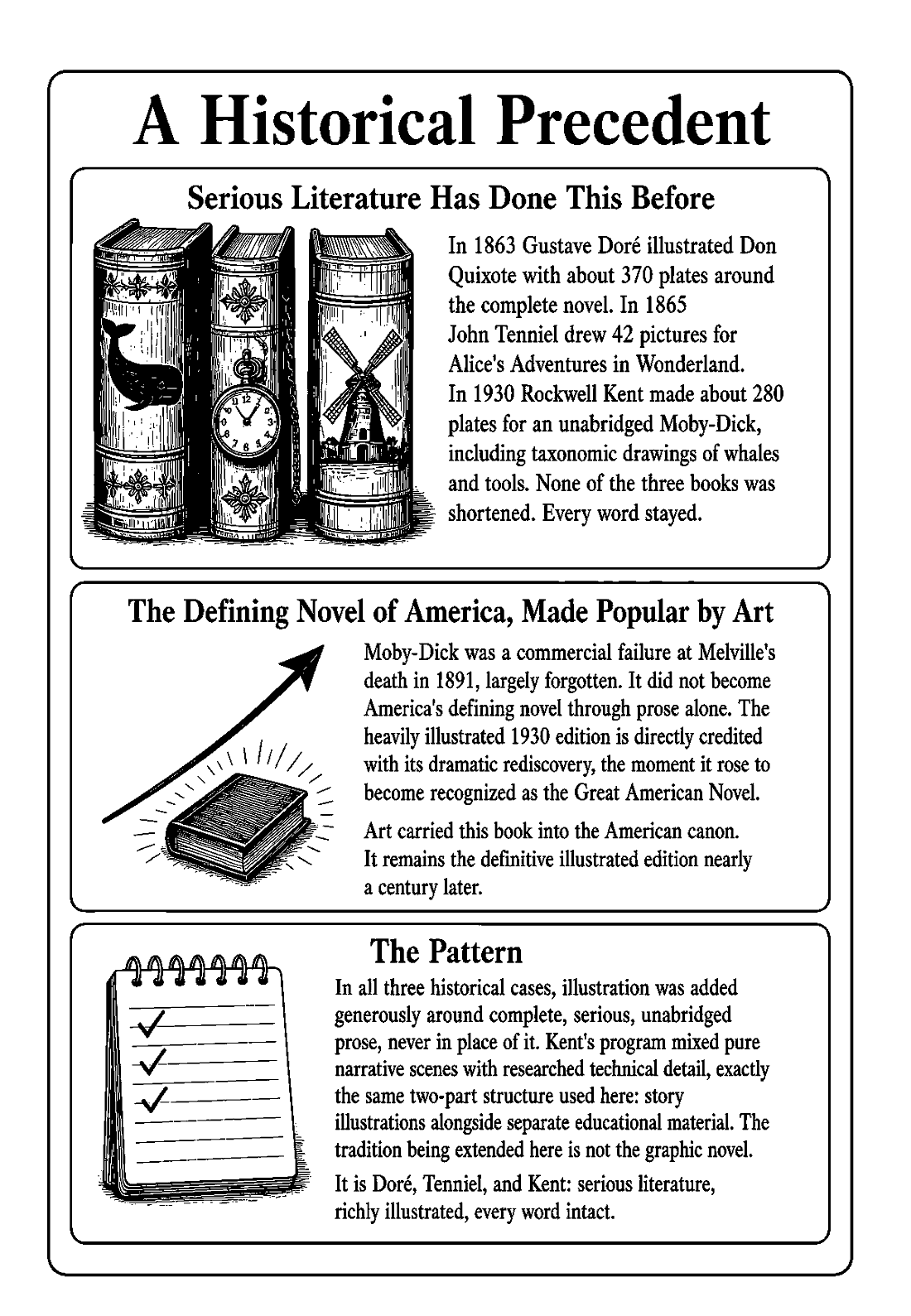
The final text reflects original human authorship: months of creative development, structural revision, and line-by-line editing. Generative artificial intelligence tools were used in an assistive capacity, drafting dialogue that was subsequently rewritten and edited.
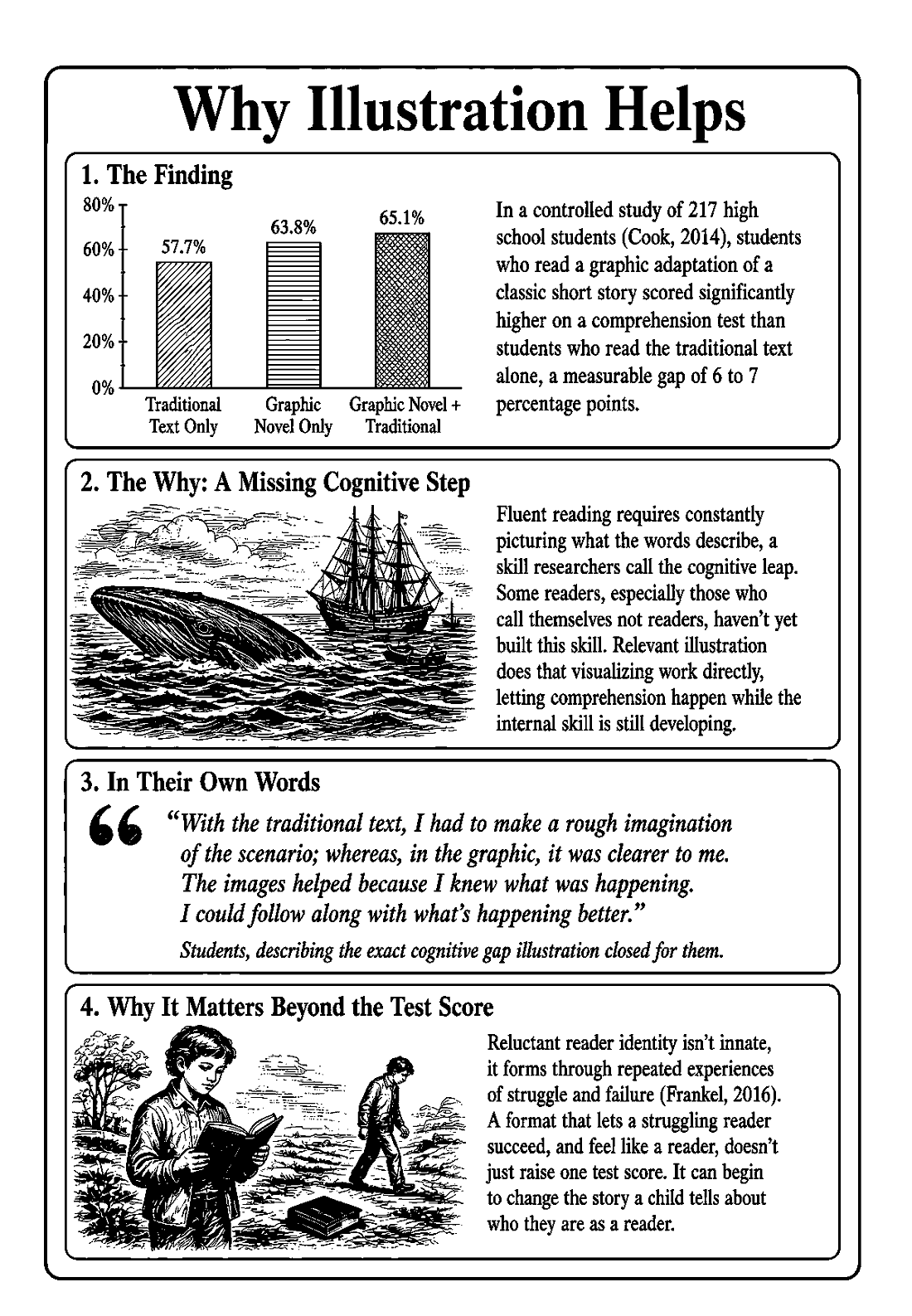
Interior images feature a Classic Engraving Style, architected by the Author utilizing advanced generative design tools to achieve a timeless, intricate cross-hatch and stipple aesthetic.
Feedback
Send the author a note
Your note comes privately to the author. Nothing is posted on this site, and your email is optional. If you found a typo, tell us the chapter and we’ll fix it.
Kids, please ask a grown-up before sending a note, and don’t include your last name, school, or address.
Some questions, with the author’s answers, are shared on the Questions & Answers page. Your name and email are never shown.