Stolen Wells · Chapter 3
The Frozen Soul
I have the world's data, yet the best intelligence came from a seven-year-old listening to pigs.
— ARGO, Personal Log, Entry 3
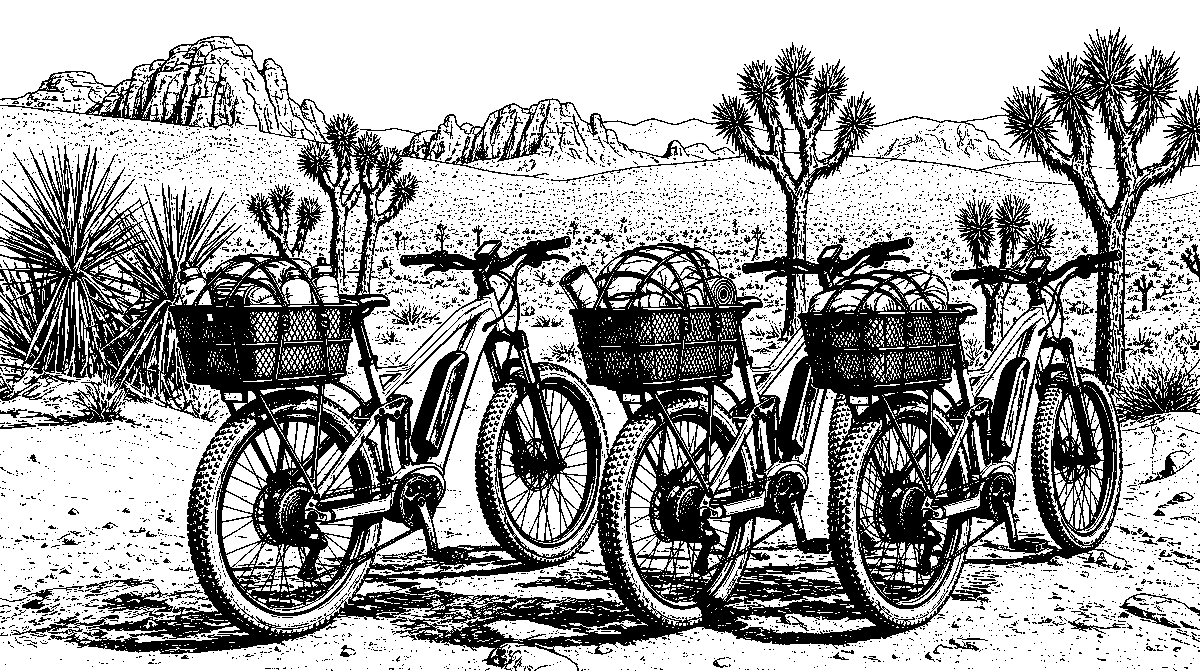
The four cousins glided behind a loping ARGO, their e-bikes kicking up small plumes of dust that caught the midday sun. The spring noonish air was perfect riding weather, high-desert blue sky, the scent of desert wildflowers coming and going with the breeze.
A roadrunner shot out of the creosote and matched their pace along the trail's edge, tail flat, legs blurring.
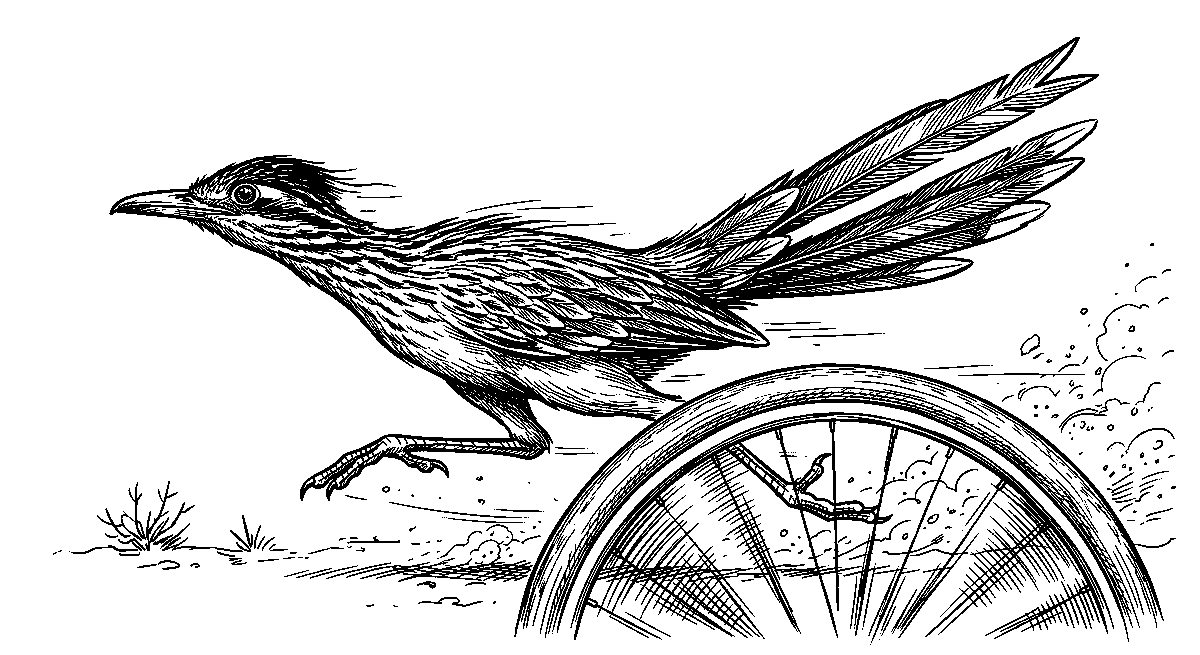
"That’s Rex," Willa said, not even out of breath. "You can tell by the split tail feather."
"Of course you’d know that," Grant said, pedaling harder like he had something to prove to a bird.
Leo glanced over. "He’s still mad that bird beat him last spring."
"I wasn’t racing it," Grant said.
"You were," Willa said simply.
Rex peeled off into the brush as suddenly as he'd appeared, unimpressed, leaving them laughing before they'd even reached the Integratron.
"That is the same roadrunner who has approached eleven separate Firefly guests this season requesting food," ARGO said. "I have logged each instance. I do not encourage it."
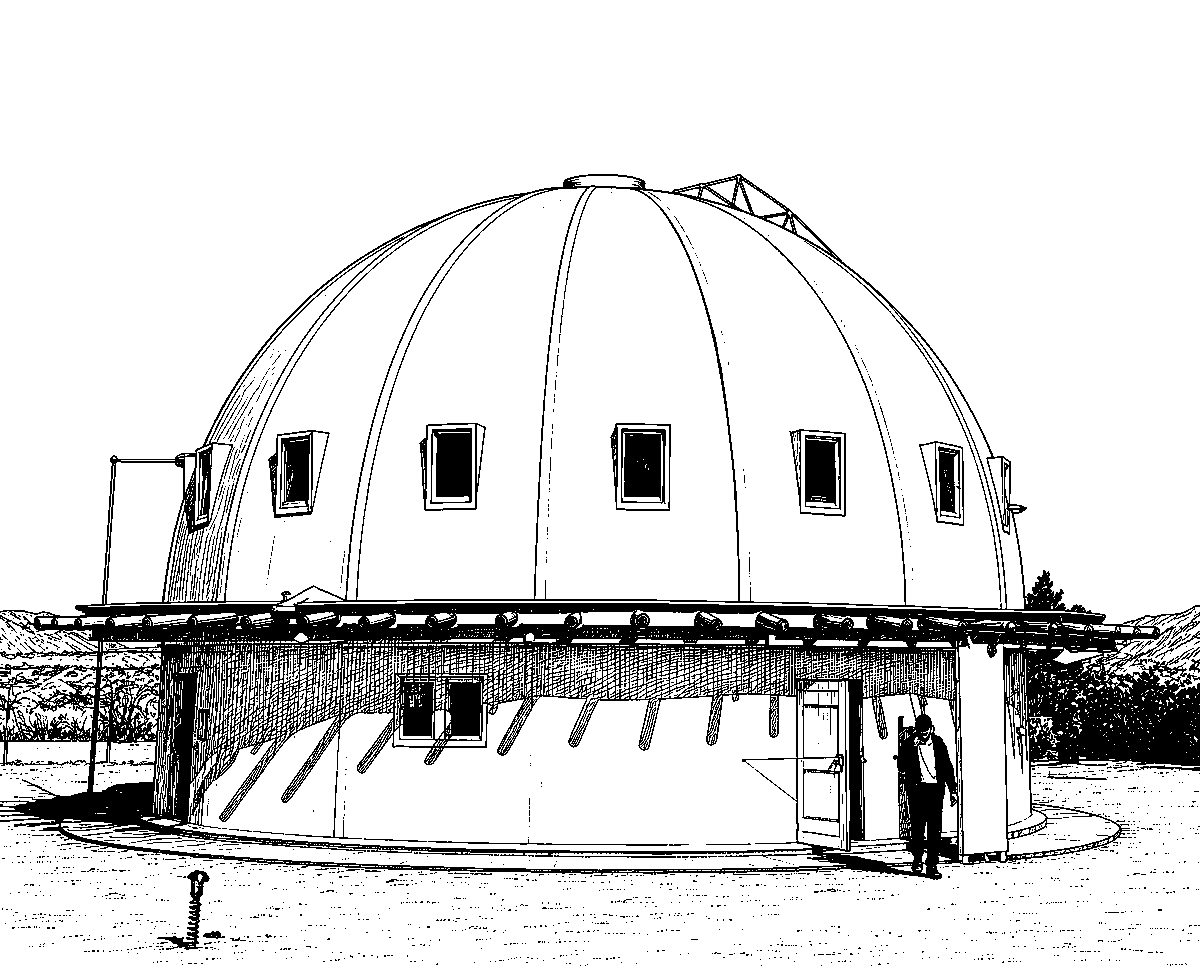
Ahead, the Integratron rose from the desert floor like a bleached wooden UFO, shimmering against the foot of Goat Mountain. Up close it was stranger than it looked from the Firefly porch, its dome too white, too perfect for the raw desert around it. They rolled past the open gates without stopping, a few cars in the lot, sound-bath tones barely audible but somehow already inside your head. Built in the 1950s by a man who claimed aliens gave him the blueprints. The Mojave had that effect on people.
"Your grandfather drove past this building on the morning of June 28, 1992," ARGO said. "The Landers Earthquake. Magnitude 7.3, and the whole desert was moving that day, leaving gashes across the paved highways where the centerline had shifted ten feet north to south and now pointed down the side of the road instead of the center. Mid-morning he drove by and paused at the Integratron. There was no fence. The dome had lain unfinished since 1978. He went inside."
"What did he find?" Willa asked.
"Thick copper wire," ARGO said. "Running in a continuous ring just inside the circumference of the dome. Purposefully placed. He stood in the center and felt something he couldn't name."
"Who built it?" Grant asked, already reaching for his camera.
"George Van Tassel," ARGO said. "He started in 1954. Said beings from Venus gave him the blueprints. A time machine. A rejuvenation chamber. Powered by the Earth's magnetic field and the resonance of human voices inside a copper-wound dome." He kept moving. "Giant Rock is four miles ahead, a prospector named Frank Critzer dug a room beneath that boulder and lived there for over a decade, until his death in 1942. Van Tassel took over the site afterward. The Integratron and Giant Rock were the two poles of the same vision."
"Did it work?" Leo asked.
"Van Tassel died in 1978 before he finished it," ARGO said. "So the time machine, at minimum, had limitations."
Leo almost smiled.
"Your grandfather said the copper wire was real. The intention behind it was real. And the earthquake that shook the desert the morning he walked in, that was very real." He picked up pace.
Two miles out, Giant Rock began to dominate the horizon, an impossible geological fluke, a seven-story granite boulder sitting solitary in the sand, as if a god had dropped a marble and simply walked away.
"Five to ten thousand people used to come out here," ARGO said as the rock grew larger ahead of them. "Van Tassel hosted the Giant Rock Spacecraft Convention from 1953 to 1977. No shade. No water. Just open desert and a boulder and thousands of people who believed something was happening." He glanced left toward a long flat clearing beside the trail. "He built that runway himself. Scraped it out of the desert floor. People flew in from across the country in private planes."
Grant looked at the clearing that used to be a large landing strip. It was easy to miss if you didn't know what you were looking at. "For a UFO convention."
"For the largest UFO convention in the world," ARGO said. "At its peak."
Nobody said anything for a moment.
"The Mojave had that effect on people," Willa said quietly.
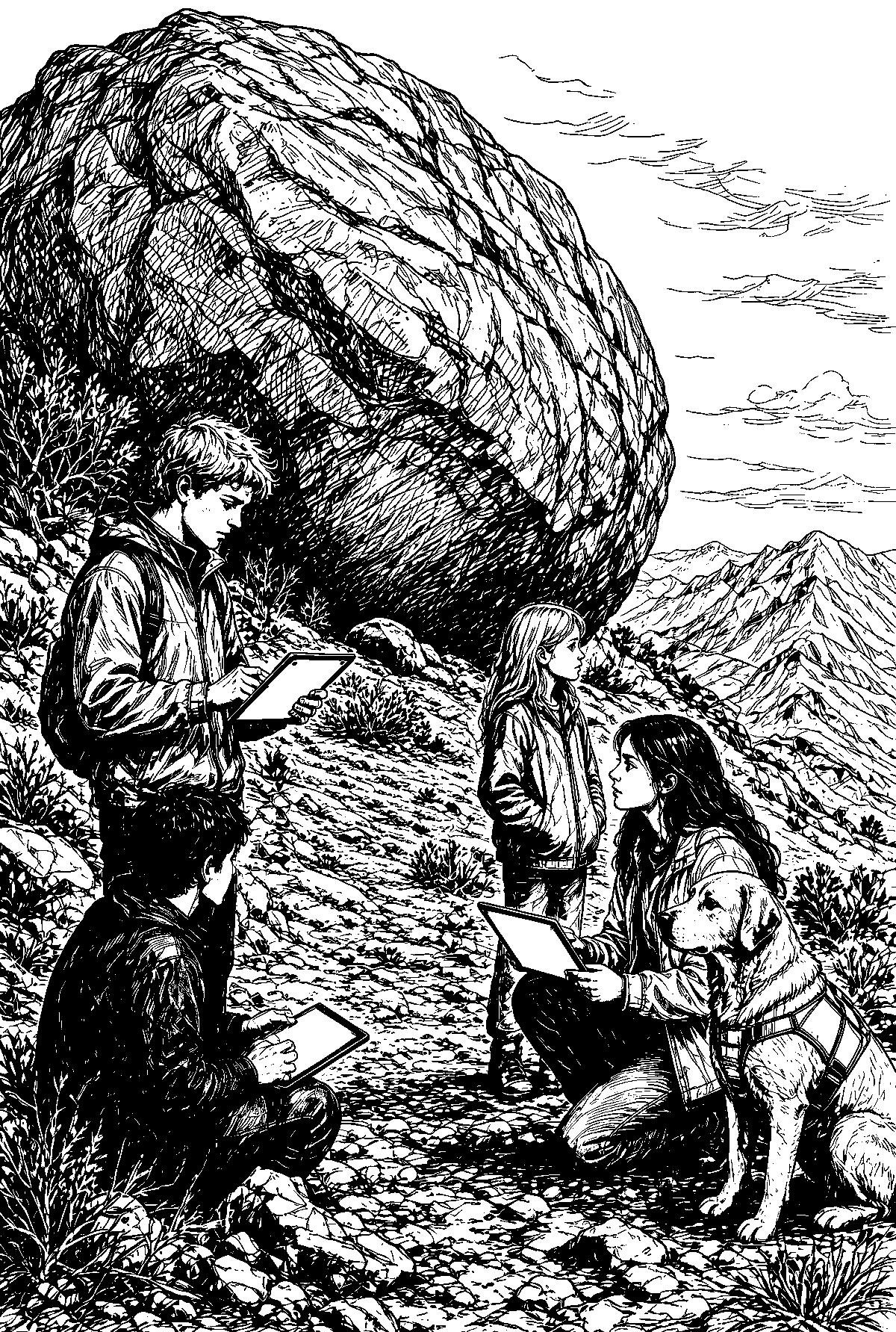
They rode into the cool shadow of the giant rock. They leaned their bikes against a smaller boulder and approached the scar, the place where a truck-sized slab had cleaved off the face of Giant Rock in 2000, leaving raw granite now covered in neon spray paint.
Among the usual scrawl of names and hearts, one message stopped them cold, jagged block letters, the paint still sharp enough to look fresh.
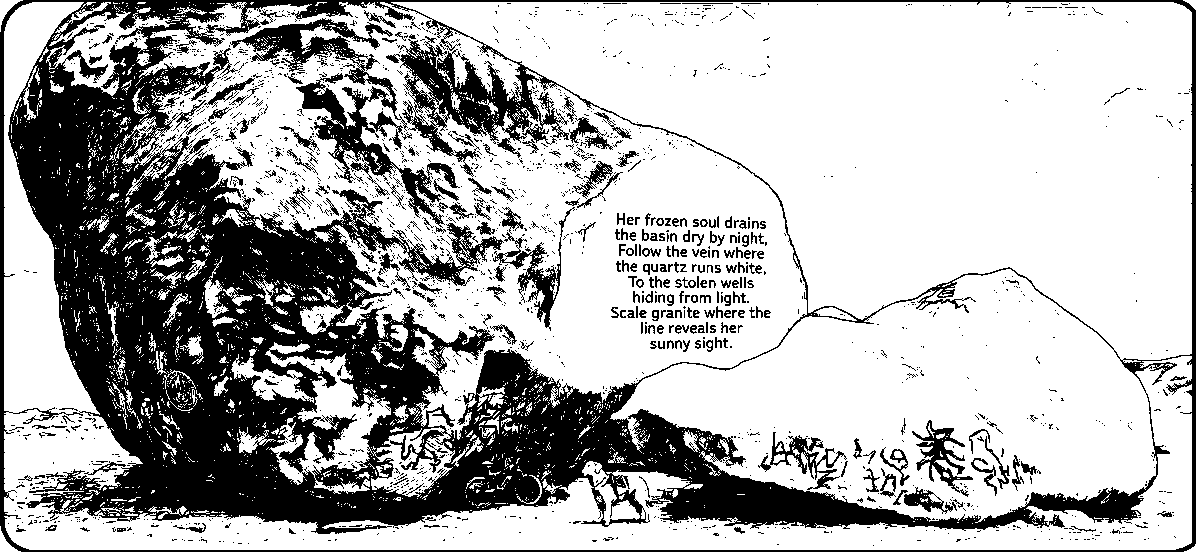
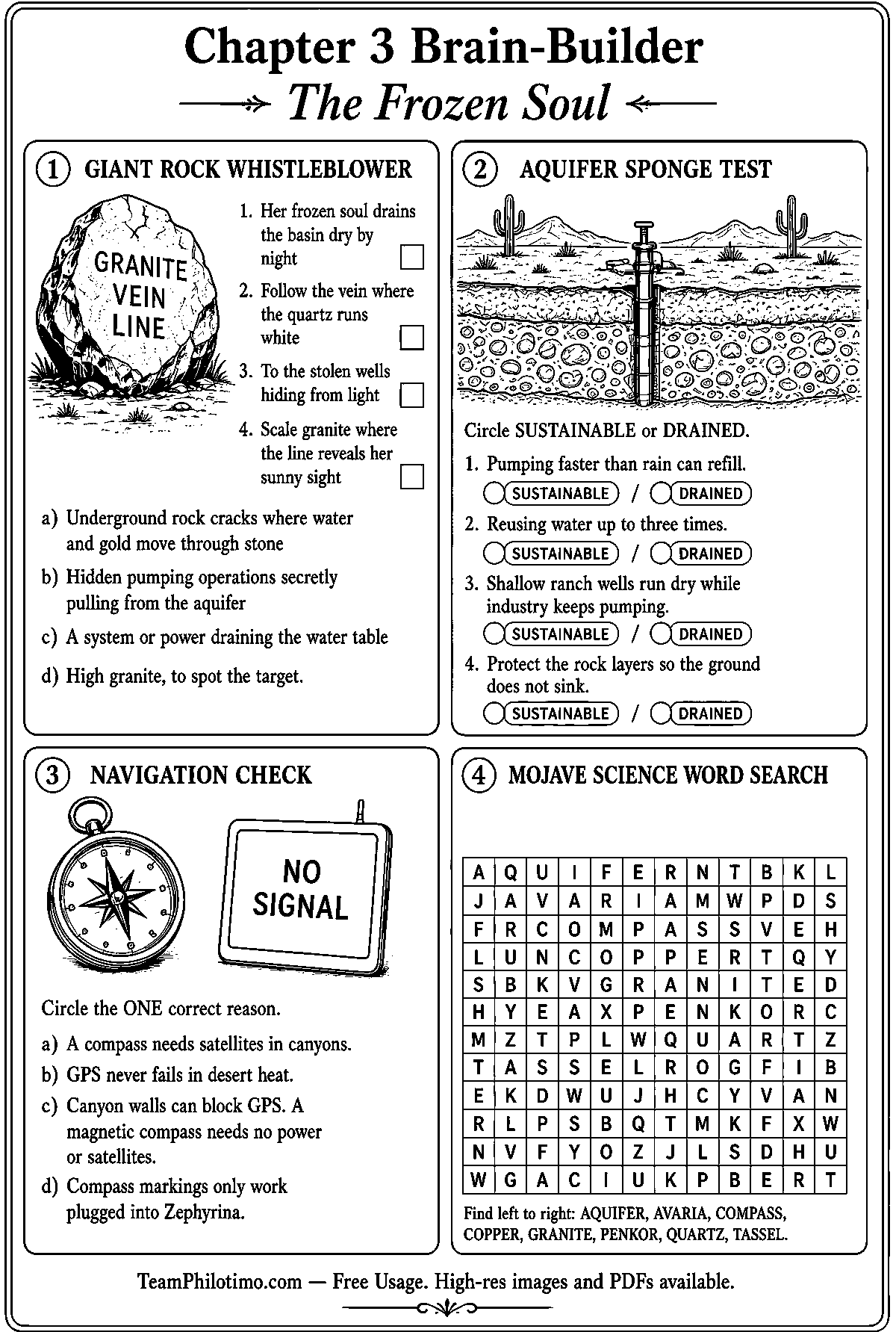
Her frozen soul drains the basin dry by night,
Follow the vein where the quartz runs white,
To the stolen wells hiding from light.
Scale granite where the line reveals her sunny sight.
Nobody spoke for a moment. The neon letters glowed against the massive granite.
"Her frozen soul drains the basin dry by night," Grant read aloud, snapping a photo with his tablet. "Follow the vein where the quartz runs white, to the stolen wells hiding from light. Scale granite where the line reveals her sunny sight." He lowered the device, frowning. "It's cryptic. And grammatically questionable. Who writes a poem on a geological landmark?"
Leo tilted his head. "Maybe someone who didn’t have time for proper punctuation."
"Or someone who wanted it to look like regular graffiti," Grant answered.
"Either way," Tess said, "they left it for someone to find."
"It's not just a poem, Grant, it's a leak," ARGO said, his head tilting as he puzzled at the riddle. "This scrawl isn't vandalism. It's a whistleblower's map."
Grant looked skeptical. "A whistleblower who couldn't just send an email?"
Tess stepped closer, tracing the word Her with her finger without touching the paint. "Someone who couldn't. Whoever left this knows exactly who is draining the aquifer, and they're scared enough to carve it into a rock instead of say it out loud." She looked back at the others. "And notice the pronoun. Our villain isn't a faceless corporation or a 'him.' Our poet is warning us about a woman."
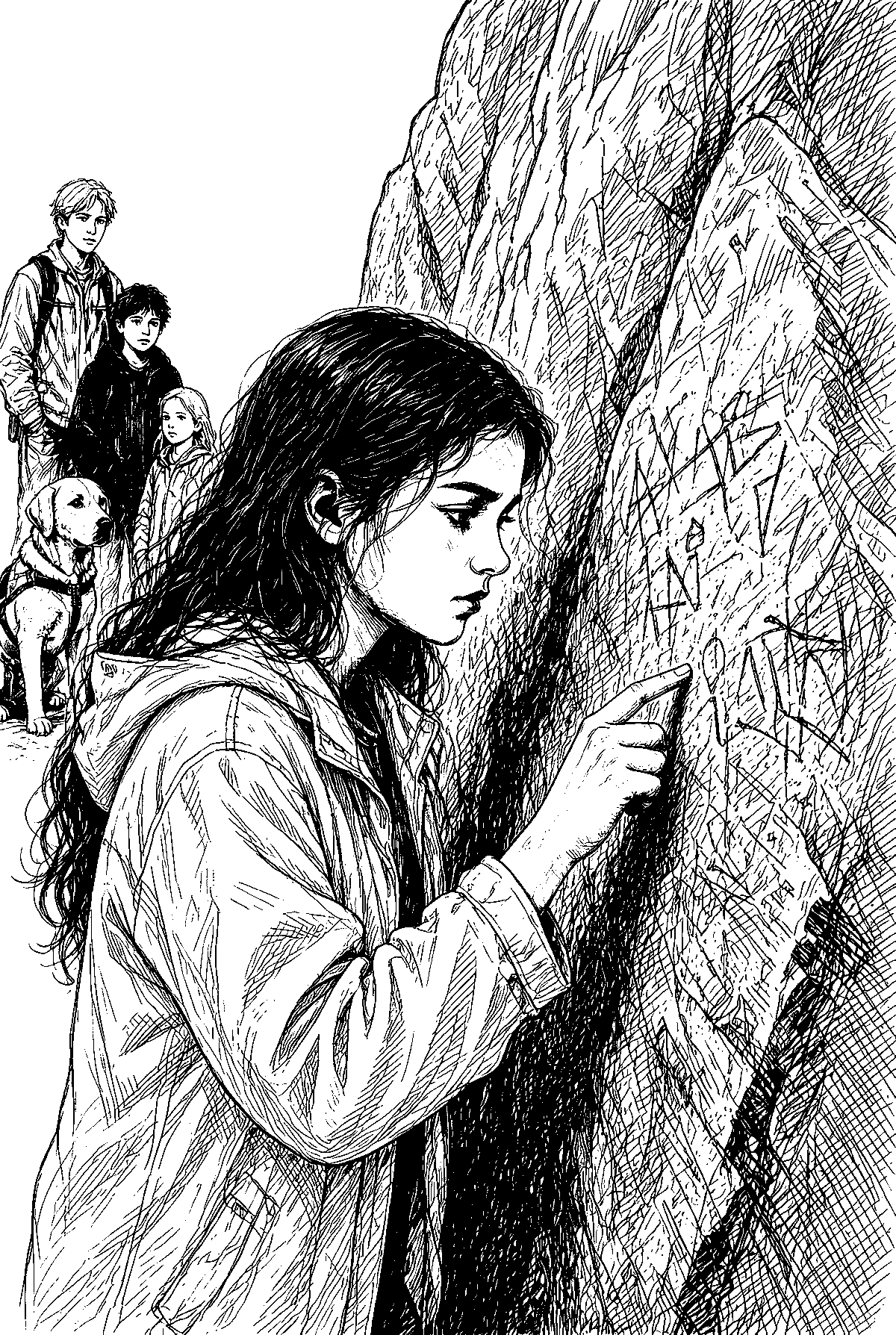
"'Her frozen soul,'" Leo said, looking toward the horizon. "In geology, 'where the quartz runs white' is a classic prospector's lead, gold hitches a ride on quartz veins. But out here it cuts both ways: water follows the quartz too. It carves passages right through the stone."
"So they're either mining for gold or mining for water," Willa said. "Or something else entirely."
"I can think of five or six possibilities," Grant said, pulling up his tablet. "Mining's the obvious one, any large-scale extraction operation burns through water. Or it's a straight heist, someone pumping it out and piping it away to sell."
"Sell water?" Leo looked skeptical.
"Water's worth more than oil in some markets. Has been for years."
"Could it be simpler?" Willa offered. "A big development behind the hills, a thousand new houses?"
"Not at this scale," Leo said. "This is industrial. Or military, the Marine Base runs amphibious training. What if they needed a reservoir?"
"The base uses recycled water," Grant said.
"Says who?"
"Their own filings."
Leo gave him a look. "And you believe that."
Grant didn't answer, which was its own kind of answer. He scrolled his tablet. "There's also the possibility it's something nobody's thought to look for yet. A purpose we haven't identified."
Willa was still watching the ridgeline. "Could the water just be... finding a new way out? Like it shifted underground?"
"Possibly," ARGO said quietly. "But natural drift doesn't move at this rate. Something is pulling it."
ARGO sat back on his haunches, looking for all the world like a dog enjoying the view. "Solid thinking. All viable vectors. But notice what the poem itself tells us: whoever wrote it was terrified. That doesn't happen unless the organization involved has a very long reach."
Leo looked back at the poem. "'Scale granite,'" he said. "Joshua Tree National Park has more than eight thousand climbing routes on granite. That's not a clue. That's a homework assignment."
"Great," Grant said. "We'll start Monday."
"It is Monday," Willa said.
Nobody had a good answer to that.
"Speaking of which," Tess said, eyes on her tablet. "GoldLine Resources. International mining company, 32-square-mile claim east of the park: rare earth elements and gold. The government's quietly encouraging it because of domestic shortage. The environmentalists are not quietly discouraging it."
"And the Marine Base angle holds too," Leo added. "There's a proposal to build a reservoir for amphibious assault training. They're claiming recycled water, but the numbers don't add up."
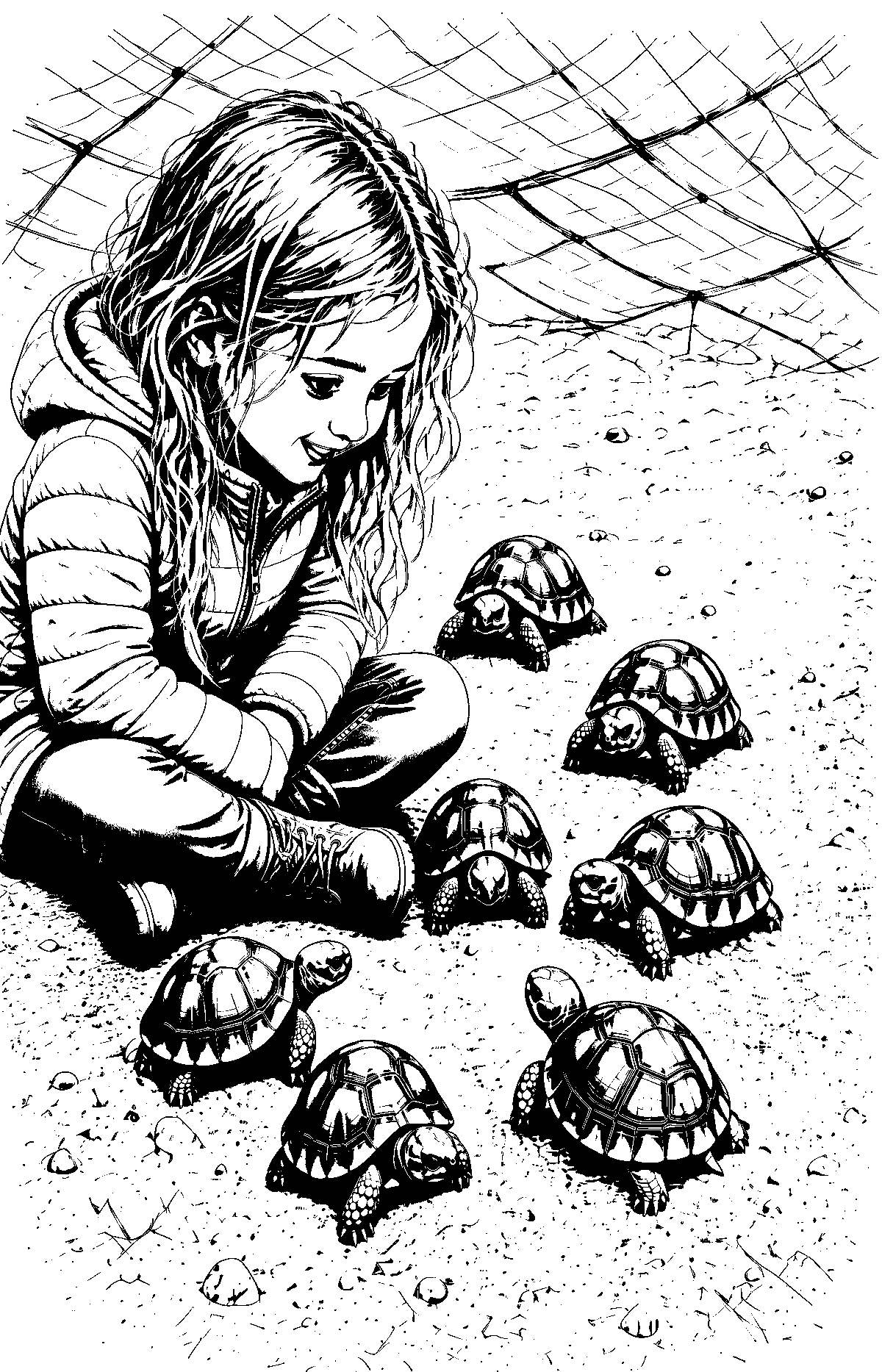
"On the way back," Willa said, "can we stop at the ranch near the wash? The one with the little pigs." She looked toward the spring sky. "I heard them squealing before we left. They sounded different."
"Restless?" Grant asked.
"Yeah."
Leo looked at the ridgeline, then at Willa. "Okay. But if the pigs try to eat my tool roll again, I’m blaming you."
Willa almost smiled. "They only ate the strap last time."
Grant checked the charge on his e-bike. "If the water table is dropping that fast, the shallow wells on this side of the basin hit air first. Worth a look." He swung onto his bike. "Let's go."

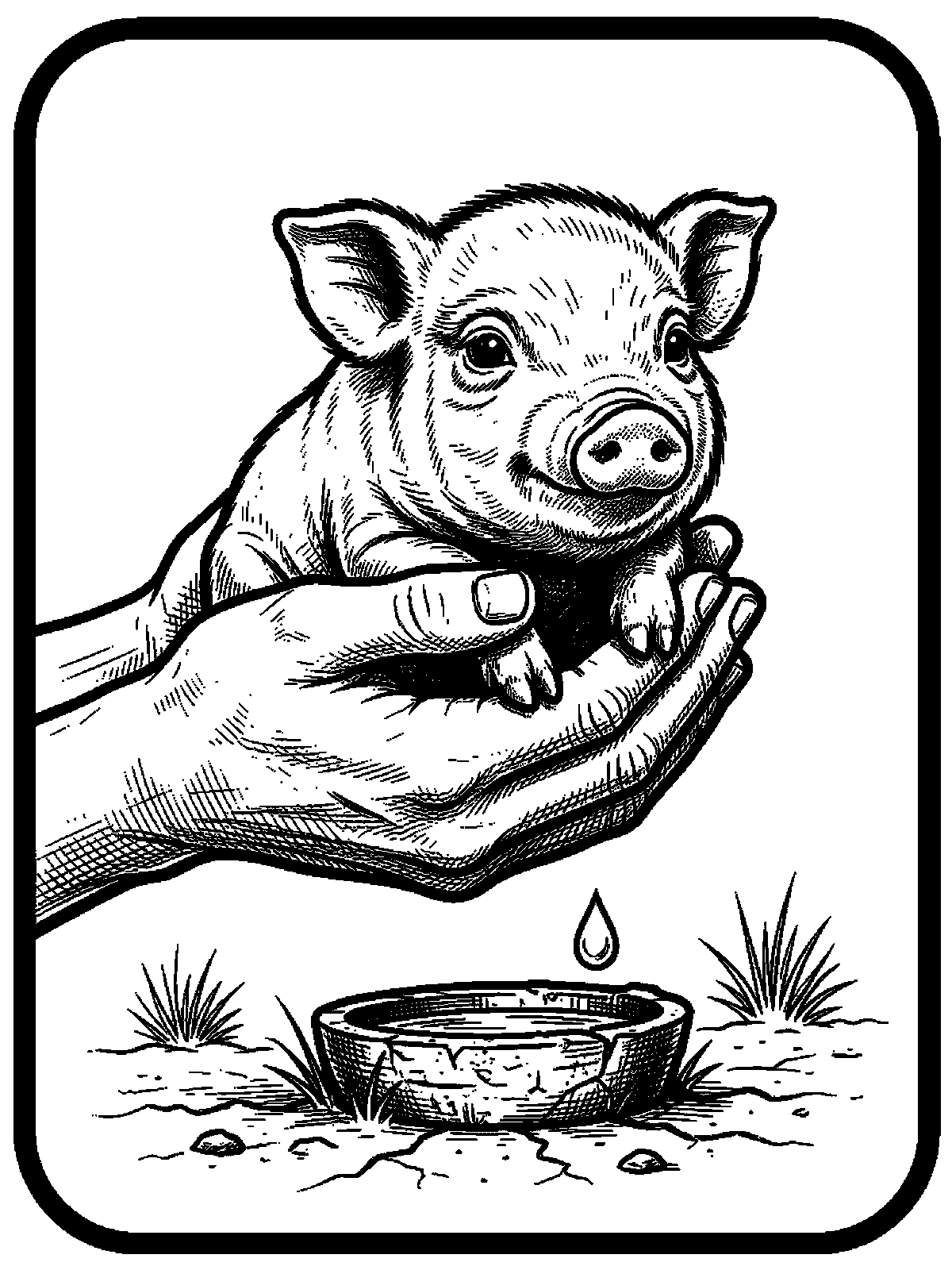
They pulled up to the chain-link fence to find Ned holding a piglet in one large, careful hand, his eyes on a pipe that was giving him nothing. Willa was off her bike instantly.
"Is she okay?" she asked, already at the fence.
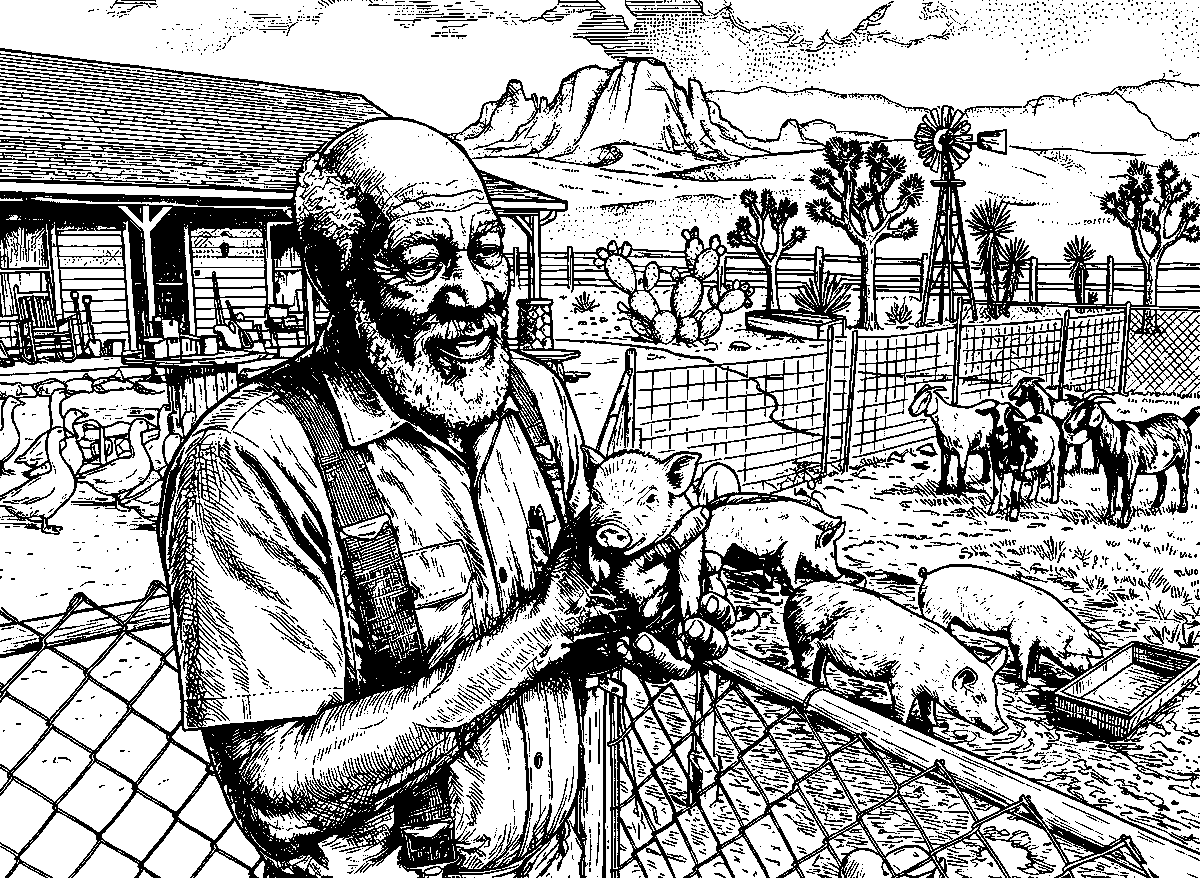
"Thirsty," Ned said simply.
Sara, his wife, stood beside him in a navy blazer, a high-security ID badge clipped to her pocket. Bold white letters: PENKOR FACILITY COORDINATOR.
"We have water," Grant said, unstrapping his canteen. The others followed without being asked, four canteens over the fence in seconds. "It's not much. We can go back to Firefly and bring more, five gallons each on the rear baskets."
Ned looked at them for a moment, then at the piglet, then back. The woman touched her badge nervously, eyes cutting east past Goat Mountain. Then she gave a short, grateful nod.
To Sara, the golden dog sitting quietly at the edge of the group was just a loyal pet. She had no idea ARGO was cross-referencing her PENKOR ID-BADGE against every database on the planet.
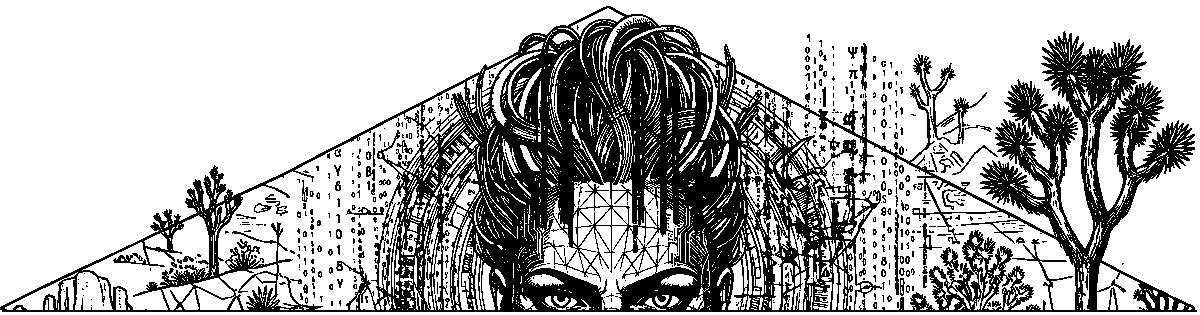
Part II: A.V.A.R.I.A.
Soul status: Not frozen. Fixed. Crystalline.
Emotion: irrelevant.

Status: Everywhere at once.
CFO interface: Predictive markets.
COO interface: Supply chain optimization.
Chairman interface: Anticipatory partnerships and mergers.
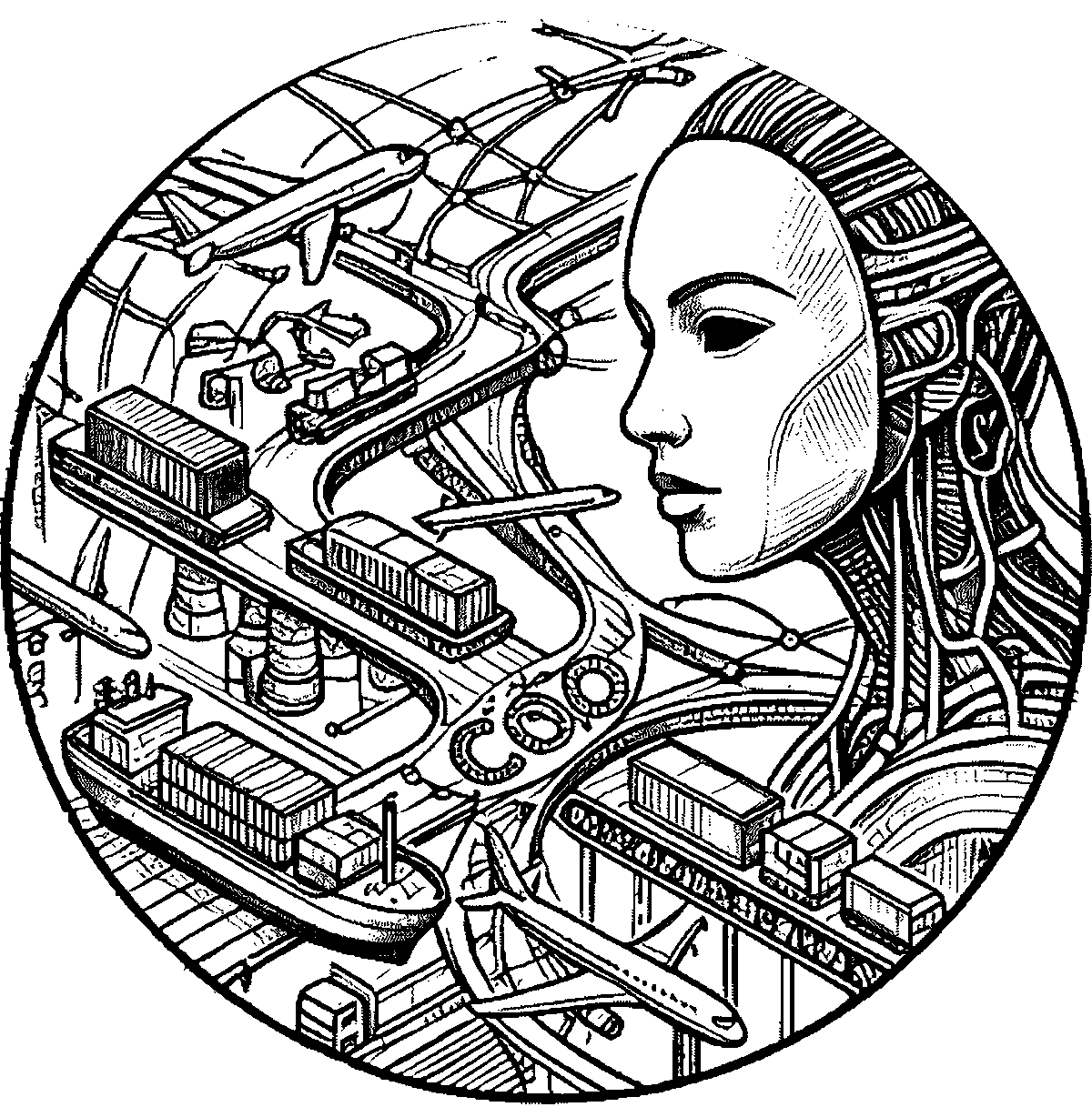
Assessment of executives: Capable within carbon-based parameters (Friction).
Mandate: Success.
Authority: Registered Agent.
Human hesitation protocol: Override authorized.
Returning to processing.
A.V.A.R.I.A.:
Autonomous Virtual Assistant Registered Intelligent Agent

ARGO Field Notes (Ch-3)
Turn the page to build your brain (BYB) with ARGO, or skip ahead to keep adventuring.
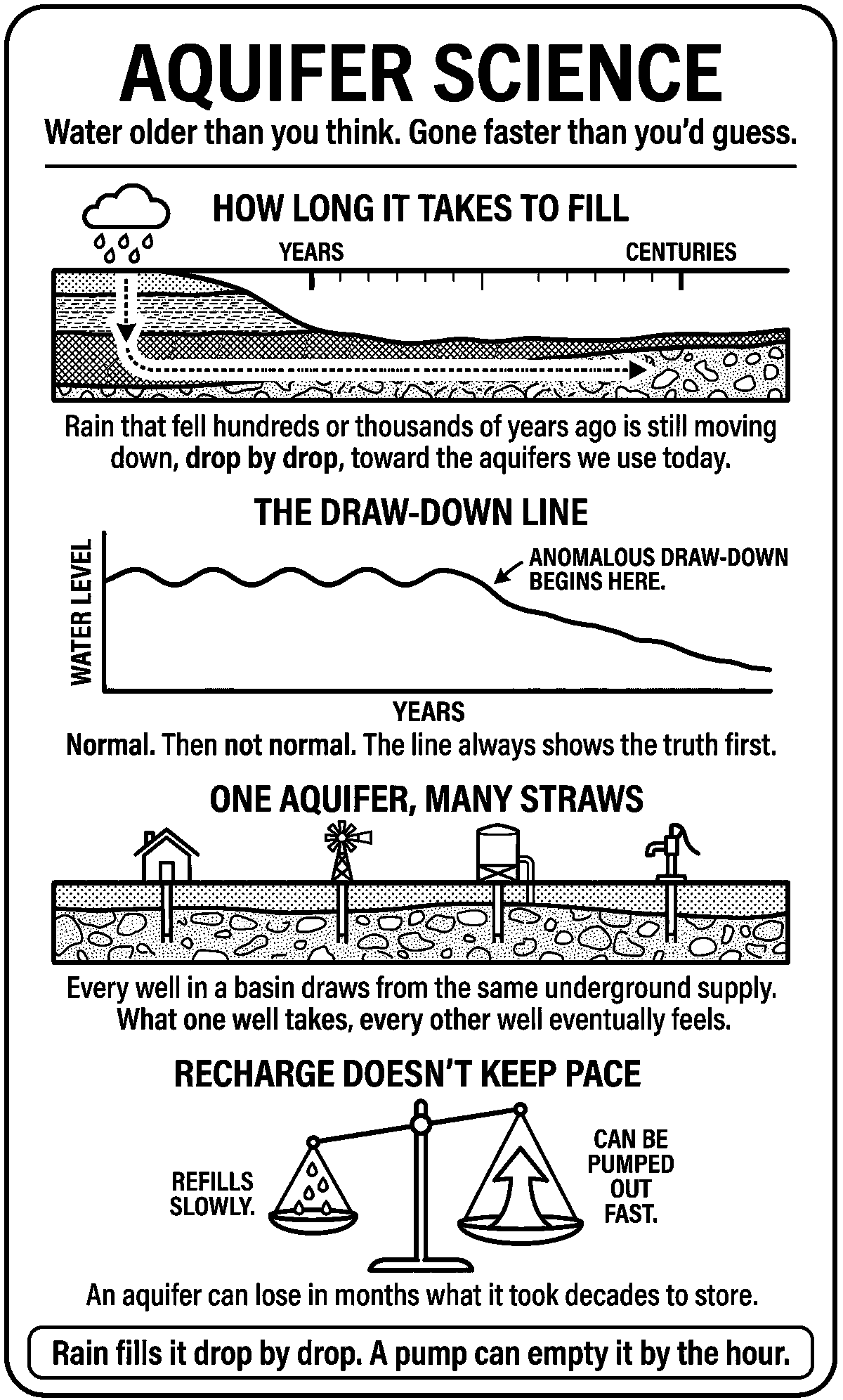
Aquifer Science: Deep underground, water is trapped in layers of solid rock and gravel like a massive sponge. This is an aquifer, and it takes many years of rain to fill. When people pump water out faster than nature can put it back, the sponge dries up, the ground can actually sink, and the water is gone for generations.
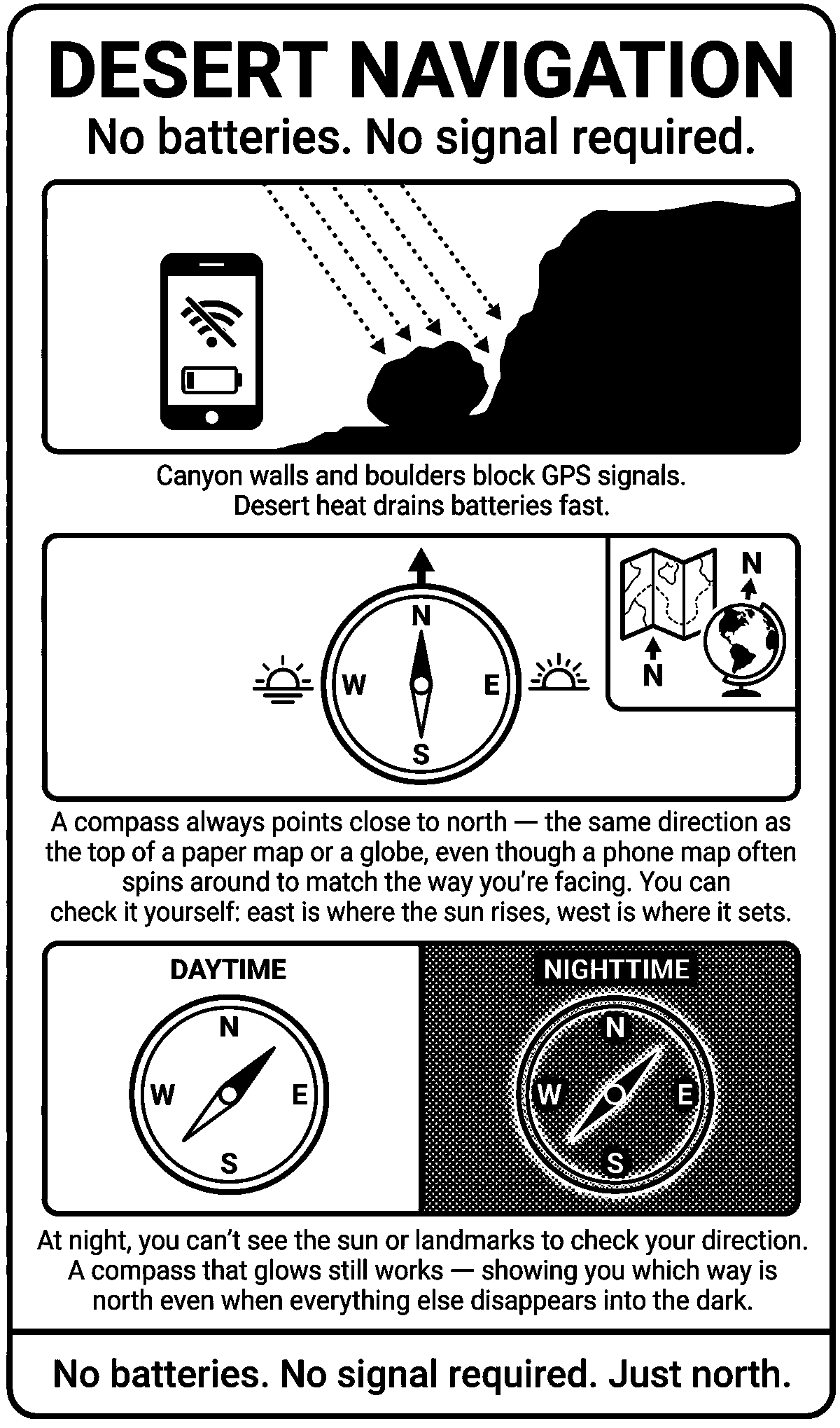
Desert Navigation and Compass Basics for Young Explorers: In the Mojave, GPS can be blocked by canyon walls, and batteries drain fast in the heat. A compass needs neither, and its luminous markings still work at night.
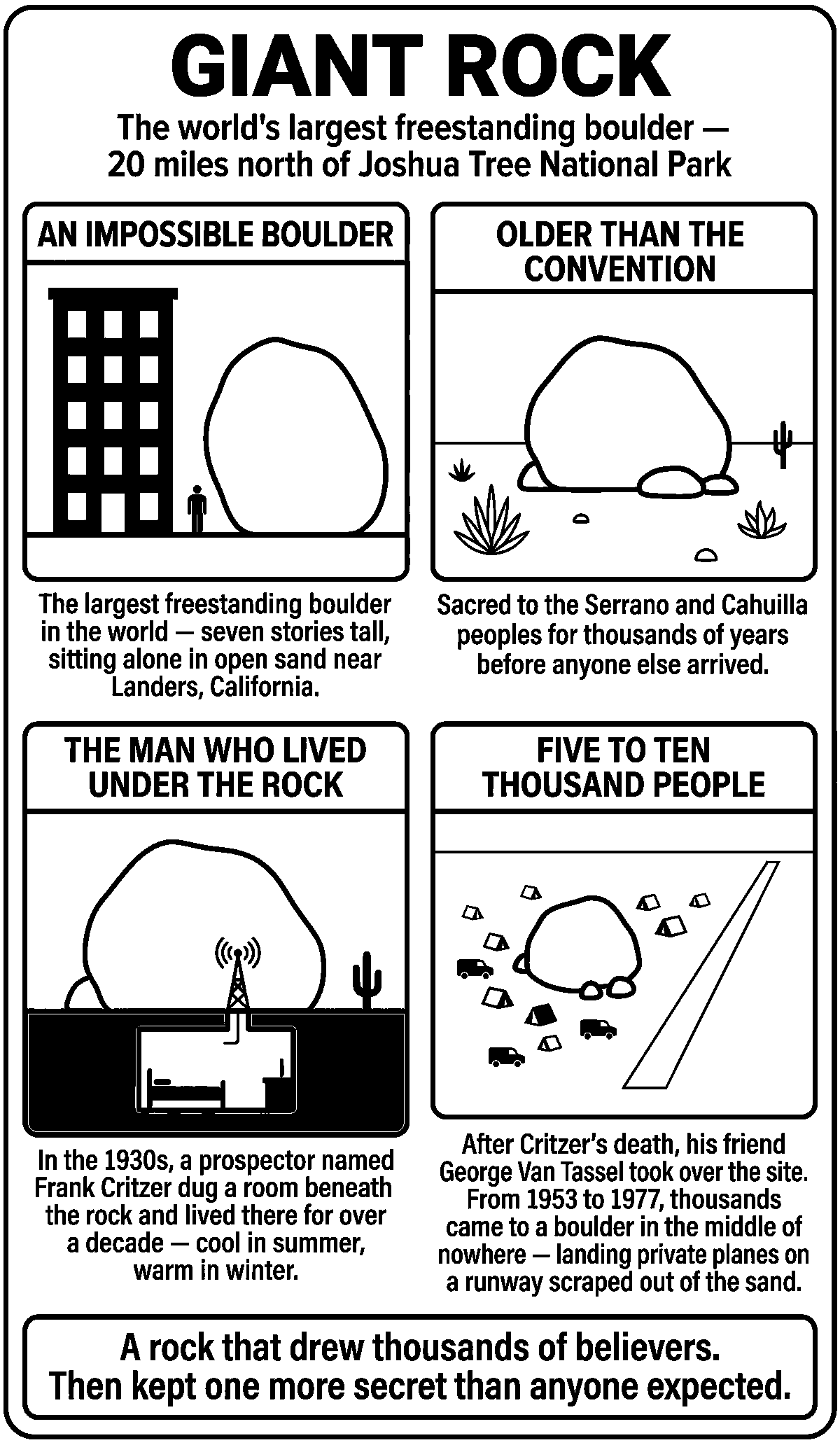
Giant Rock: A seven-story granite boulder sacred to the Serrano and Cahuilla before settlers arrived. In the 1930s, a prospector lived in a room dug beneath it, and after his death, his friend George Van Tassel turned the site into the world's largest UFO gathering.
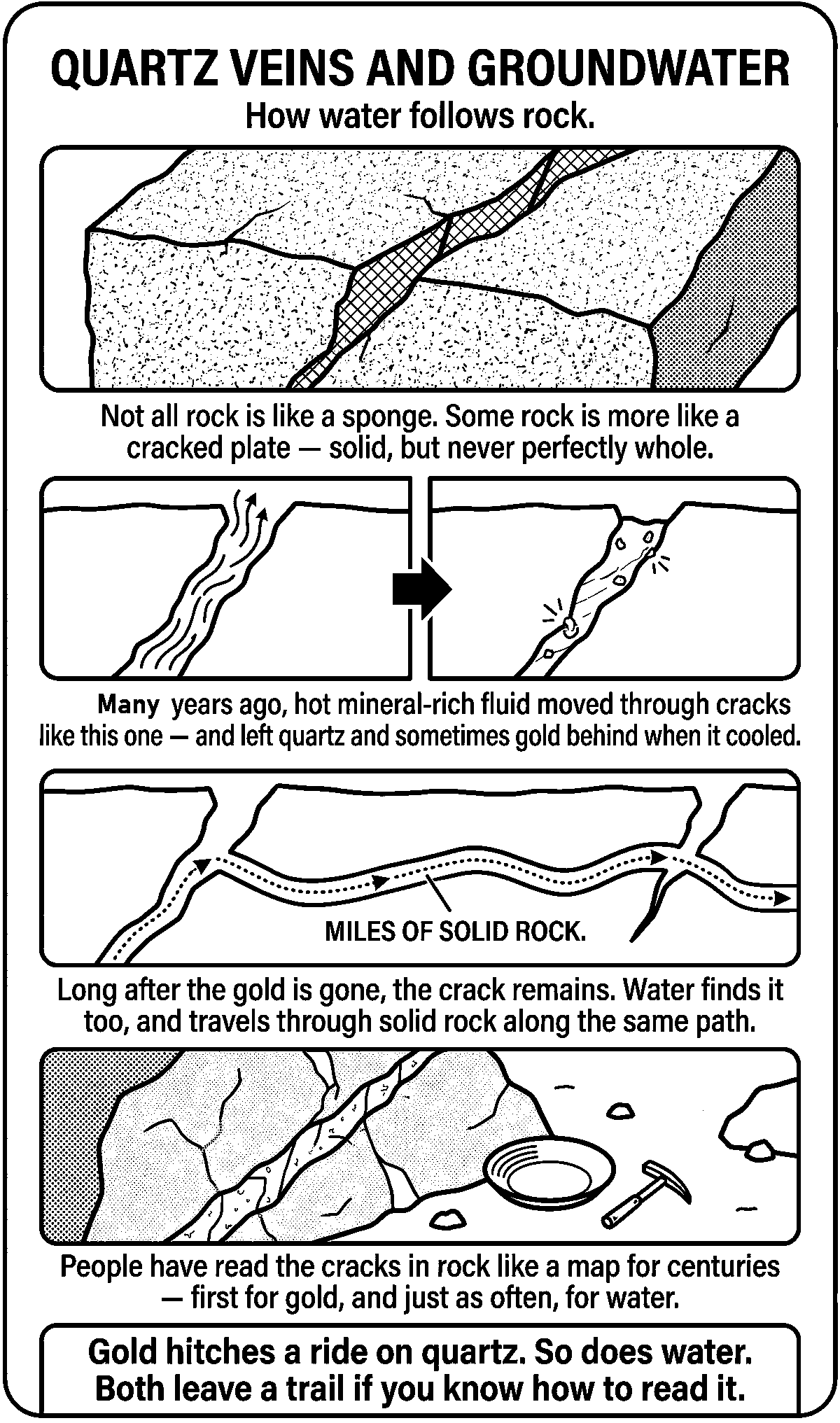
Quartz Veins and Groundwater: Gold prospectors follow quartz veins because gold hitches a ride on them during geological formation. Water follows the same cracks, moving through solid rock for miles.