Team Philotimo

Goals & Values · Φ Philotimo

Your love and your honor require you to do the right thing.

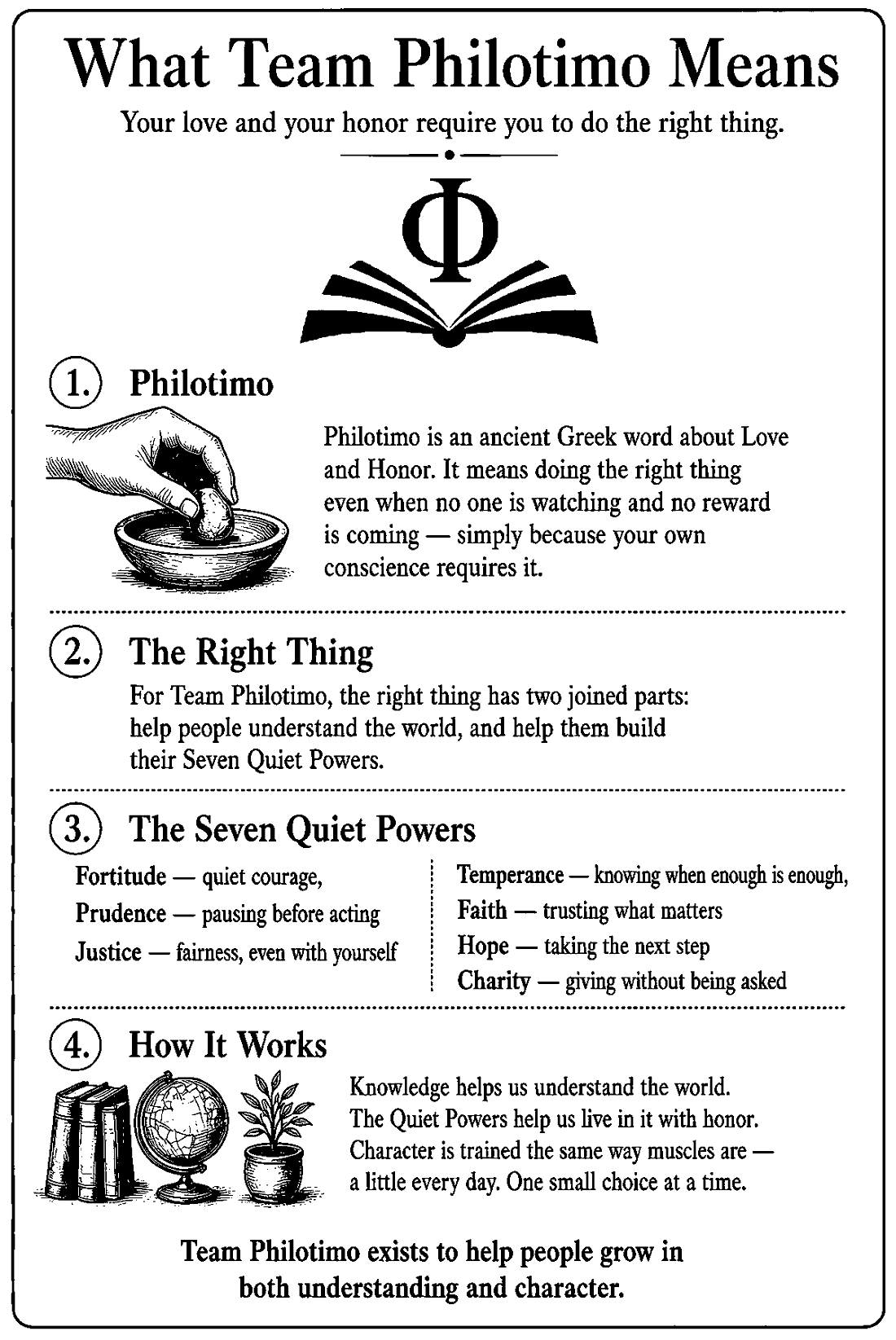
Philotimo is an ancient Greek word about Love and Honor. It means doing the right thing even when no one is watching and no reward is coming, simply because your own conscience requires it.

For Team Philotimo, the right thing has two joined parts: help people understand the world, and help them build their Seven Quiet Powers.

Infographic: What Team Philotimo Means.

Why these books are written this way

Three goals in every chapter

Each Team Philotimo book is an adventure first. Kids should want to turn the page. But every chase, clue and conversation is also there on purpose, to do three things at once.

Goal one

Real science and technology

The water machine, the solar landship, the robot dog's muscles and the aquifer under the desert are all built on real science, and most of it is already in laboratories today. When a reader closes the book, the science is still true. Seventy-four infographics and fifteen Brain-Builders let curious kids go deeper.

Goal two

Character that lasts

The cousins don't win because they are the strongest or the smartest. They win because they practice the Seven Quiet Powers, often when it costs them something. Children learn character the way they learn anything else: by seeing it, then trying it.

Goal three

Pictures that carry the load

About every other page has an engraving-style illustration. The pictures do some of the imagining, so a young reader can follow a full-length story with real vocabulary and real ideas while their reading skills are still growing.

Watch

Two short videos

Where the Quiet Powers come from

Very old ideas, shared by nearly everyone

The Seven Quiet Powers are not new, and they don't belong to any one group. Team Philotimo just gives them a fountain with seven sides and a name kids can remember.

The four cardinal virtues (Fortitude, Prudence, Justice and Temperance) come from ancient Greece, where Plato and Aristotle described them as the habits a good life turns on. “Cardinal” comes from the Latin word for a door hinge.

The three theological virtues (Faith, Hope and Charity) come from St. Paul's letter to the Corinthians: “And now these three remain: faith, hope and love.” Families of many faiths will recognize them in their own traditions.

The same ideas run through nearly every tradition. Caring for those in need is tzedakah in Judaism, zakat in Islam, and karuna (compassion) in Buddhism. That is why the books share these powers with every family.

How the books put them to work

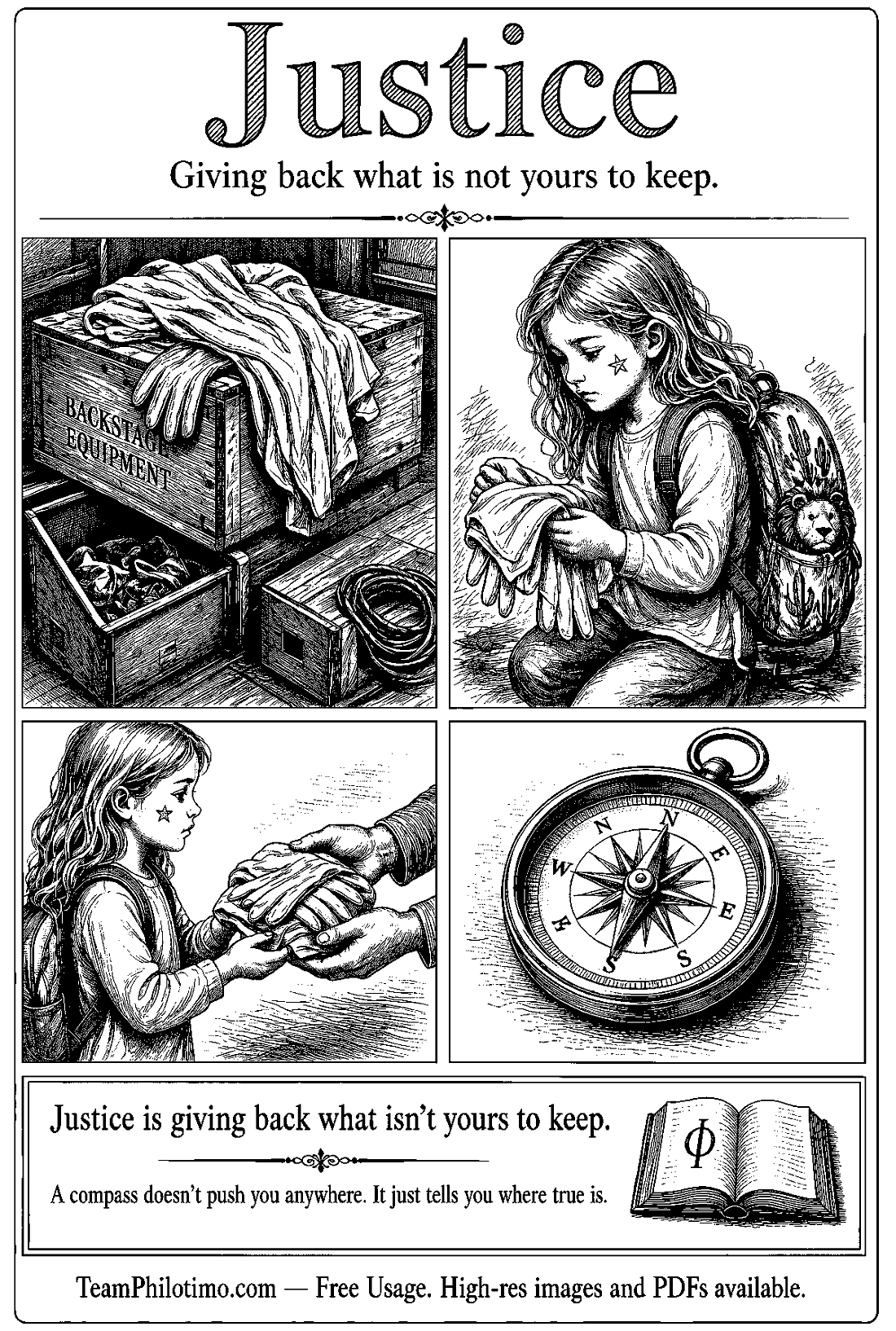
  • The Compass Principle (Justice). Tell the truth, and quietly give back what isn't yours to keep. A compass doesn't push you anywhere; it just tells you where true is.
  • The Restorative Cycle (Justice). When a grown-up or a company does real harm, saying sorry isn't the end. Repair, Accountability, Dialogue and Reintegration: fix what was broken, own it, talk it through, and welcome the person back.
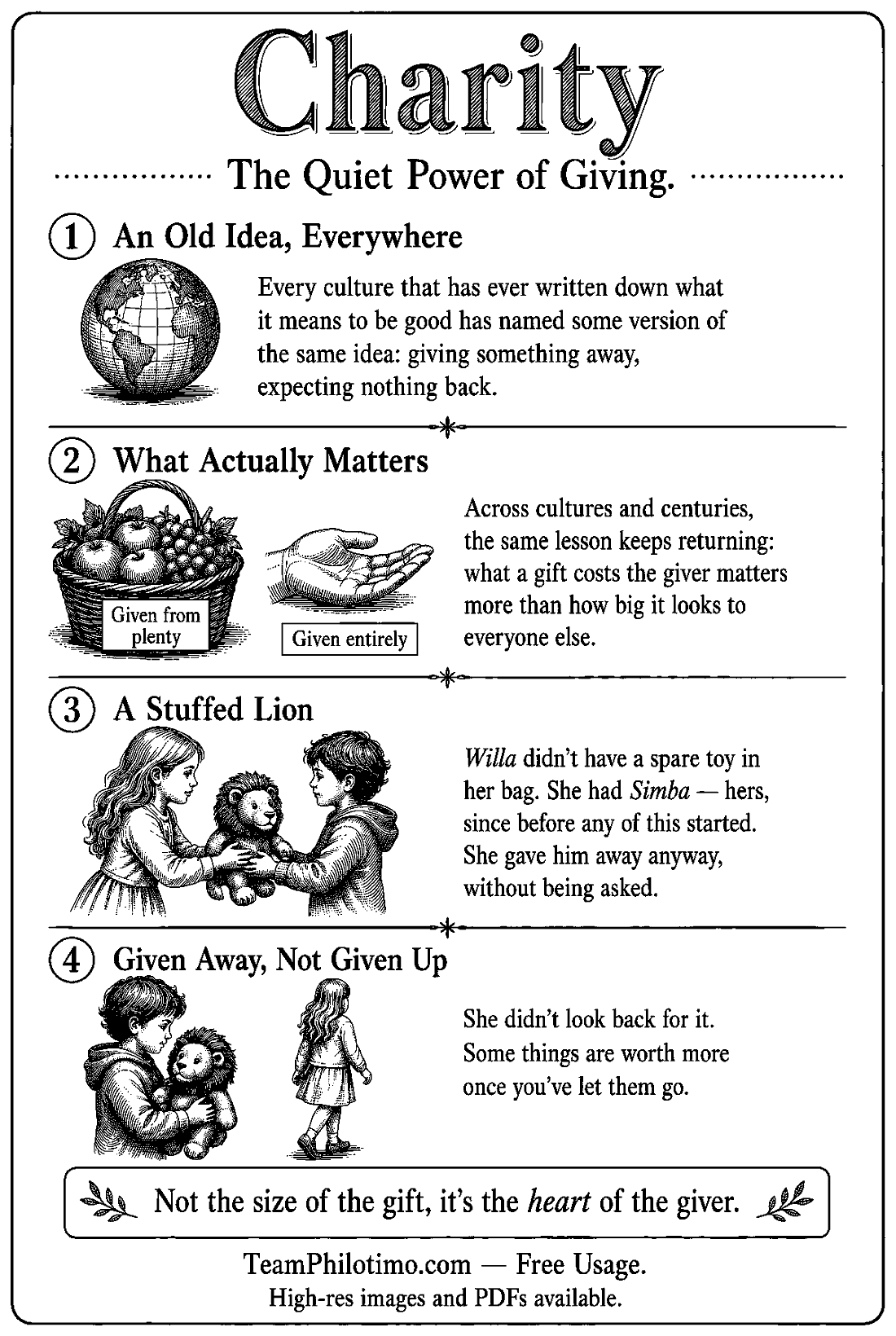
  • Respect looking across, not pity looking down (Charity). “Charity” comes from the Latin caritas, from carus, “dear.” It first meant holding someone as precious. Real compassion treats a person as a whole human being: it answers their hard questions honestly and doesn't walk away.
  • Every power, every day. Fortitude, Prudence, Temperance, Faith and Hope each get a simple “Try this” that a child can do today, listed below.

Seven sides of the fountain at Firefly

The Seven Quiet Powers

Character is trained the same way muscles are, a little every day. The fountain at Firefly has seven sides, one for each power: the four cardinal virtues and the three theological virtues.

When things feel hard

Cardinal

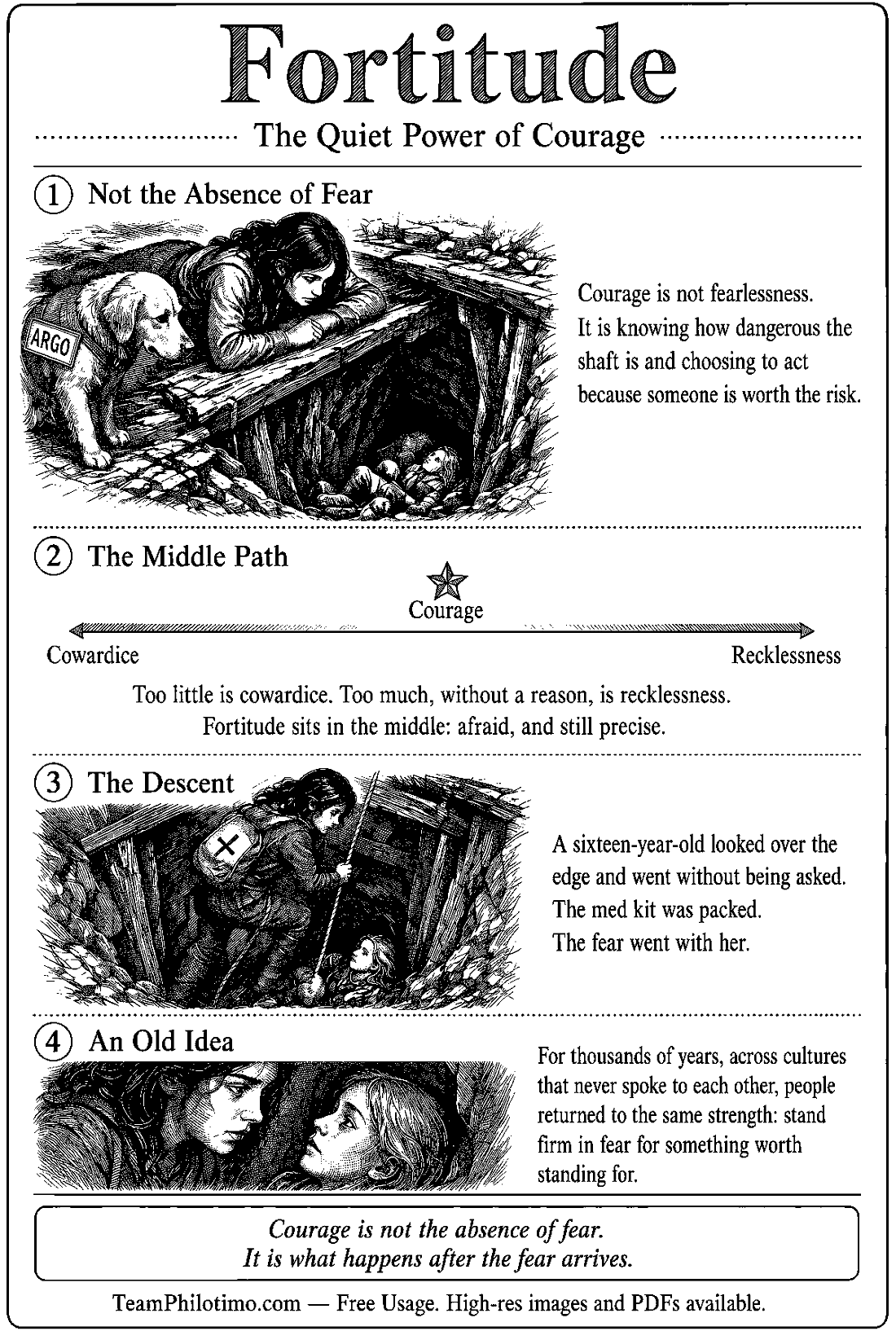
Fortitude

The quiet form of courage: keep going when you want to stop.

Try this: Finish the last ten minutes of studying even when your brain wants out.

Cardinal

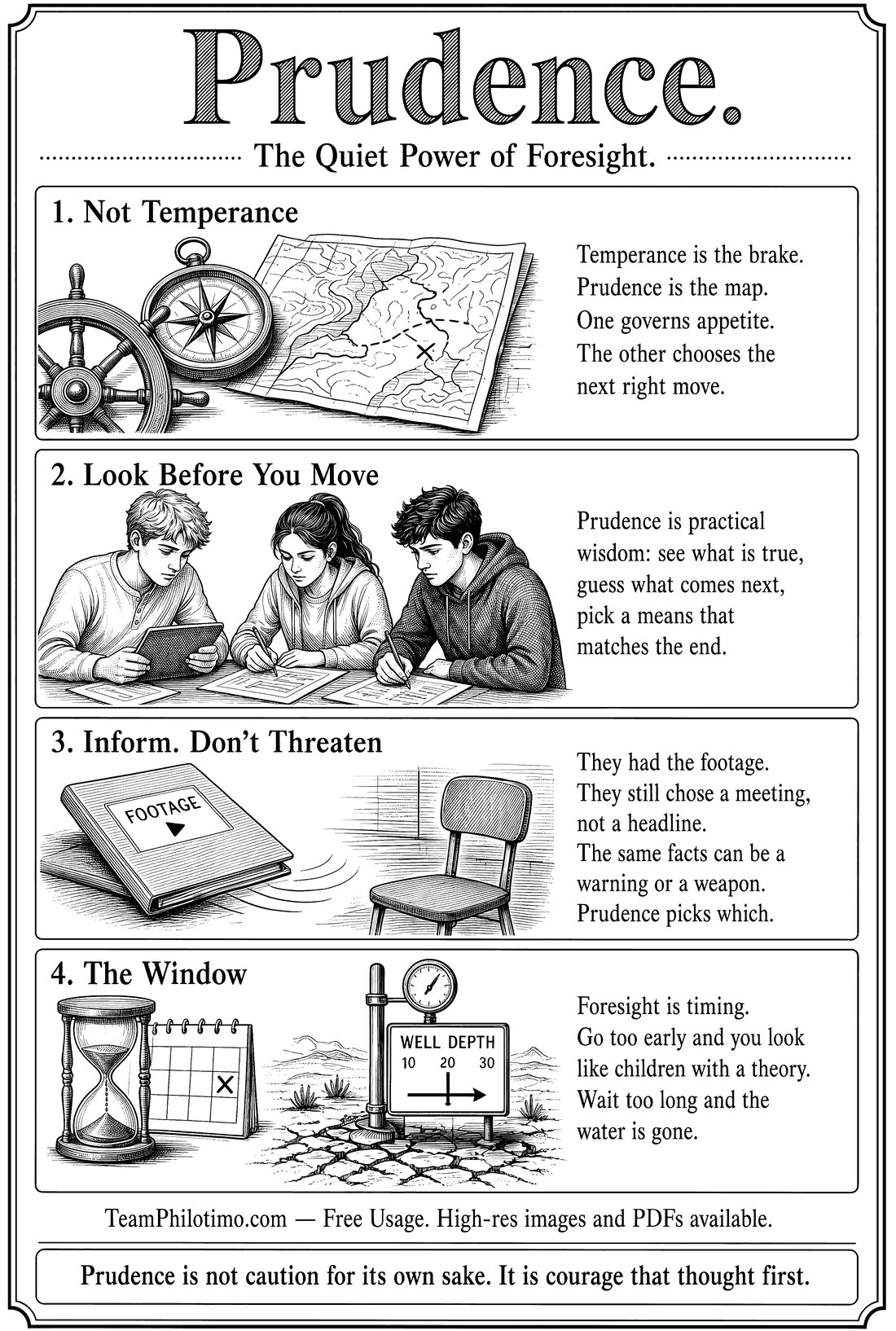
Prudence

Pause before you react.

Try this: When someone makes you angry, wait five full breaths before speaking.

When you have choices

Cardinal

Justice

Be fair, even when no one is scoring you.

Try this: Admit your part in an argument first.

Cardinal

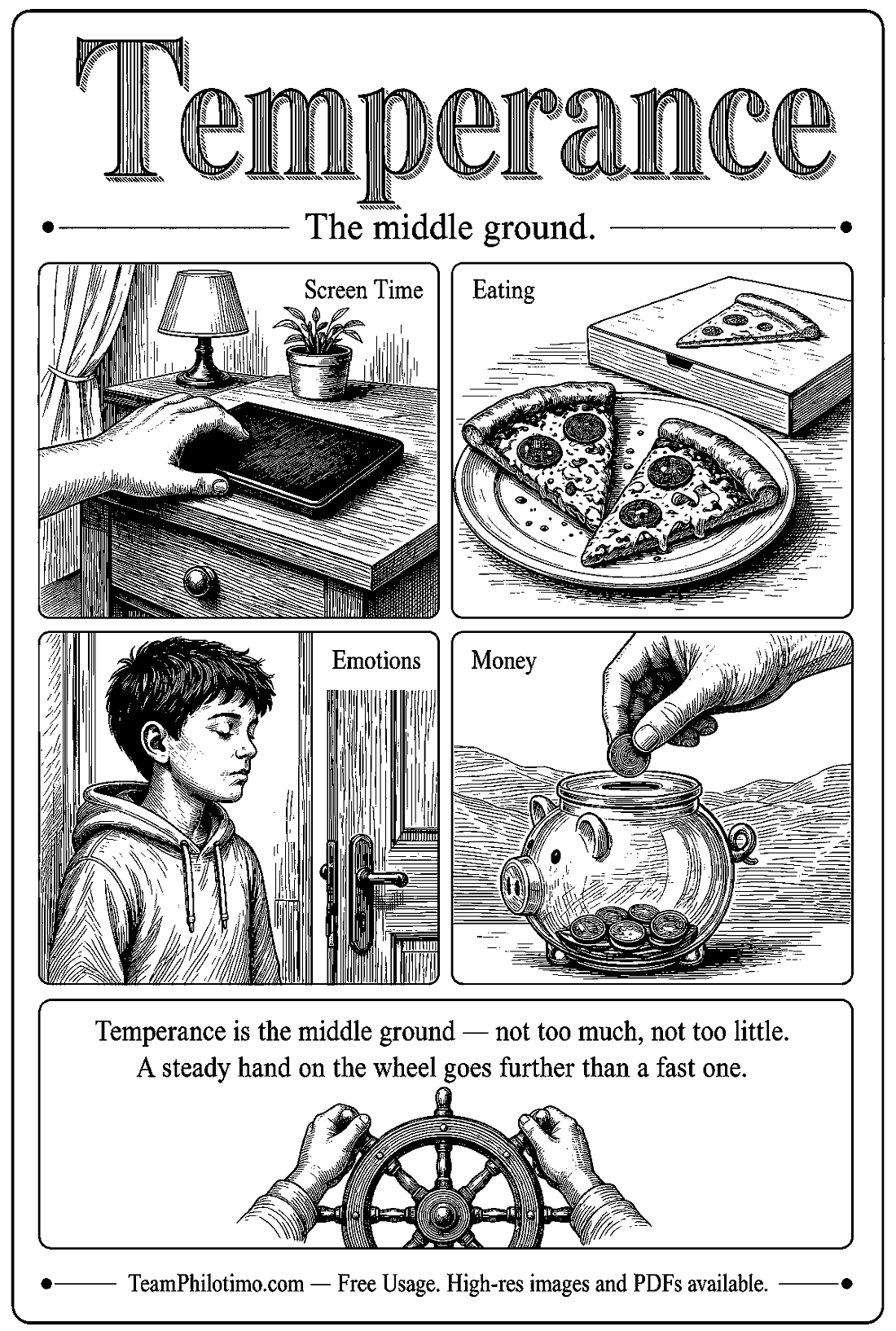
Temperance

Know when enough is enough.

Try this: Set a timer for screens and actually stop when it rings.

When the path isn’t clear

Theological

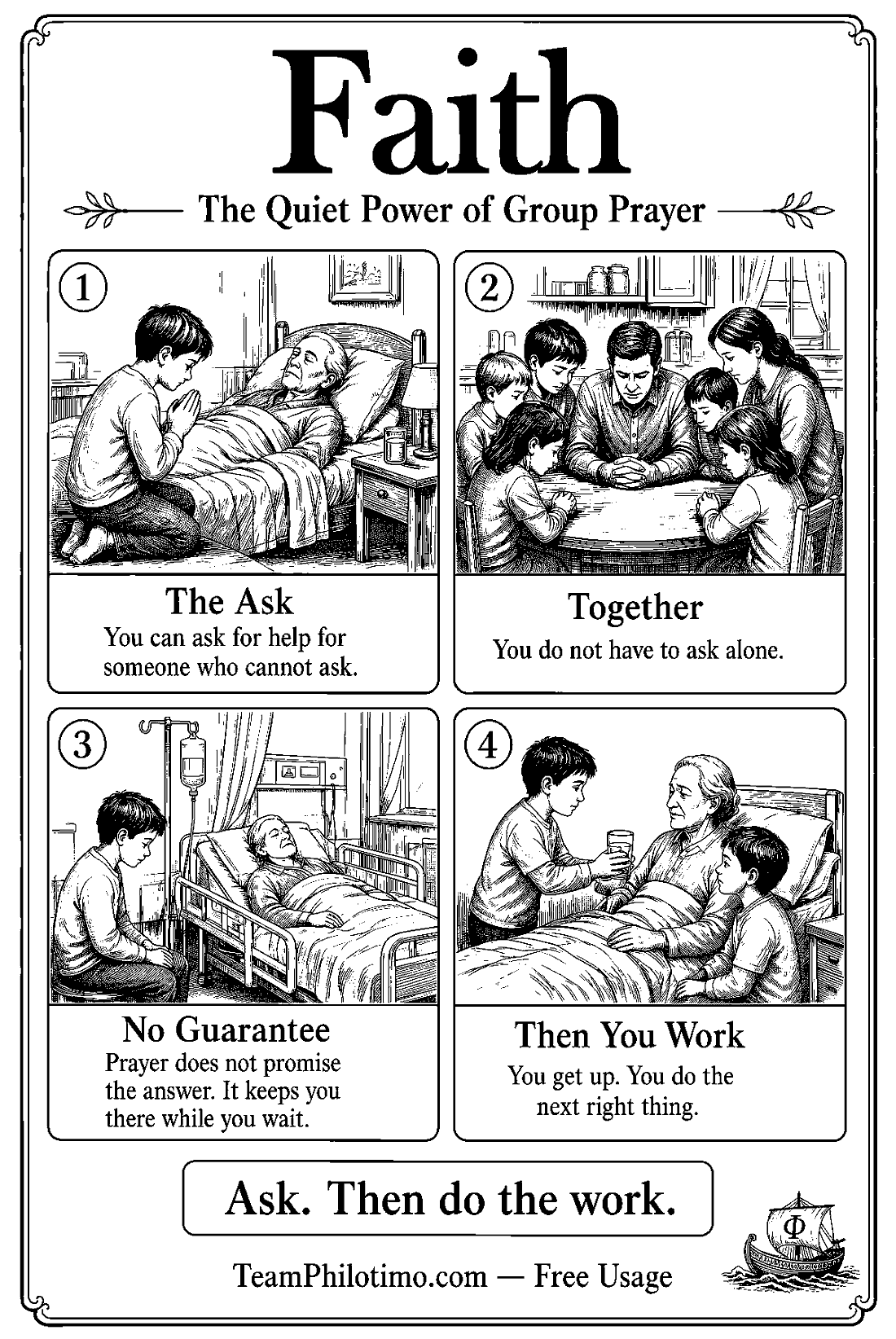
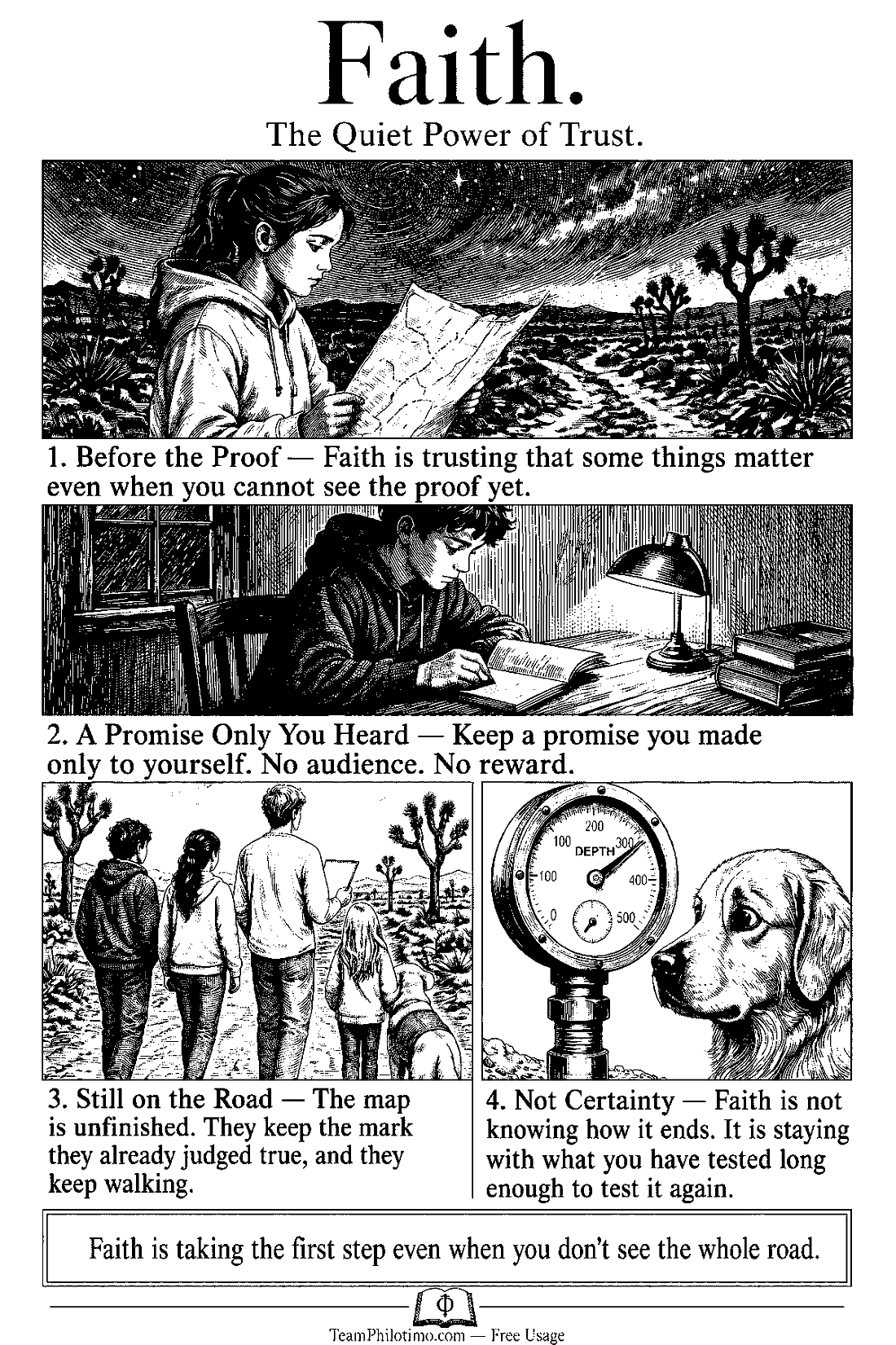
Faith

Trust that some things matter even when you can’t see the proof yet.

Try this: Keep a promise you made only to yourself.

Theological

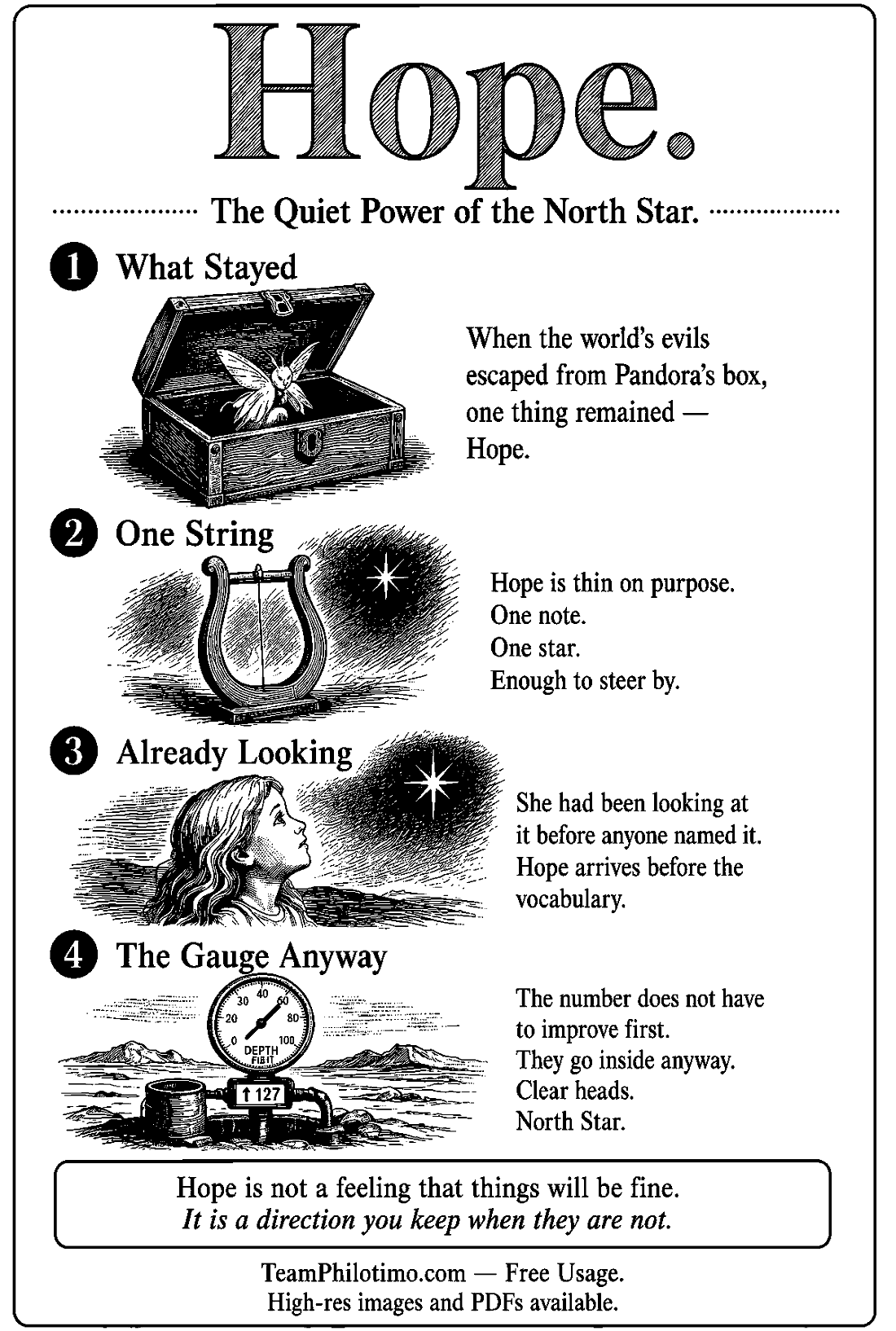
Hope

Take the next small step anyway.

Try this: After a failure, write down one thing you will try differently tomorrow.

When someone else needs you

Theological

Charity

Give something of yourself without being asked.

Try this: Notice who is sitting alone and sit with them, or help without announcing it.

These seven powers work in every direction, toward yourself and toward everyone your life touches. Pick one. Practice it today. Then pick another tomorrow.

Why so many pictures?

An old idea for young readers

For most of history, the great unshortened books that young people loved came with lots of pictures. Nobody cut the story down; the illustrations helped readers climb up to it. Team Philotimo follows that tradition: Stolen Wells has 142 illustrations, and every book in the series will have at least 100.

Every picture, infographic and Brain-Builder is there for a reason: to help a reader see, understand, or think about what is right. It is a different goal from media made only to fill time.

Illustrated editions of classic books
BookEditionUnique illustrations
Don Quixote1863, Gustave Doréabout 370
Alice's Adventures in Wonderland1865, John Tenniel42
The Adventures of Tom Sawyer1876, True Williams162
Adventures of Huckleberry Finn1885, E. W. Kemble174
Moby-Dick1930, Rockwell Kent (Lakeside Press)280
Stolen Wells2026, Team Philotimo251

Counted the same way as the classics, whose totals include their small chapter heading drawings: Stolen Wells has 142 full illustrations, 74 infographics, 15 Brain-Builders and 20 chapter emblems, 251 unique pictures in all. Every book in the series will have at least 100 illustrations and 50 infographics.

From the book

The Quiet Powers in Stolen Wells

Each power gets its own full-page plate in the chapter where the team needs it. Tap a page to see it full size.

For families and teachers

A Quiet Power of the week

Pick one power on Monday. Read its page together, try the “Try this,” and talk at dinner about when someone in the family used it. Next week, pick another.

All the pages are in the free Moral Literacy Infographics PDF.

For grown-ups

Why virtues, not rules

Children are usually given rules, and AI is usually given constraints. Neither one is the same as character. Team Philotimo takes the older path: goodness is grown by example and practice. The seven classical virtues show up in nearly every culture and tradition, which is why the books share them with every family.

JoinPhilotimo.com

Join Team Philotimo

The Team Philotimo idea is meant to be shared. Other authors are welcome to write their own Team Philotimo stories set in their own corners of the world, using the premise and the Seven Quiet Powers under an open Creative Commons license. The characters of this series stay with these books.